


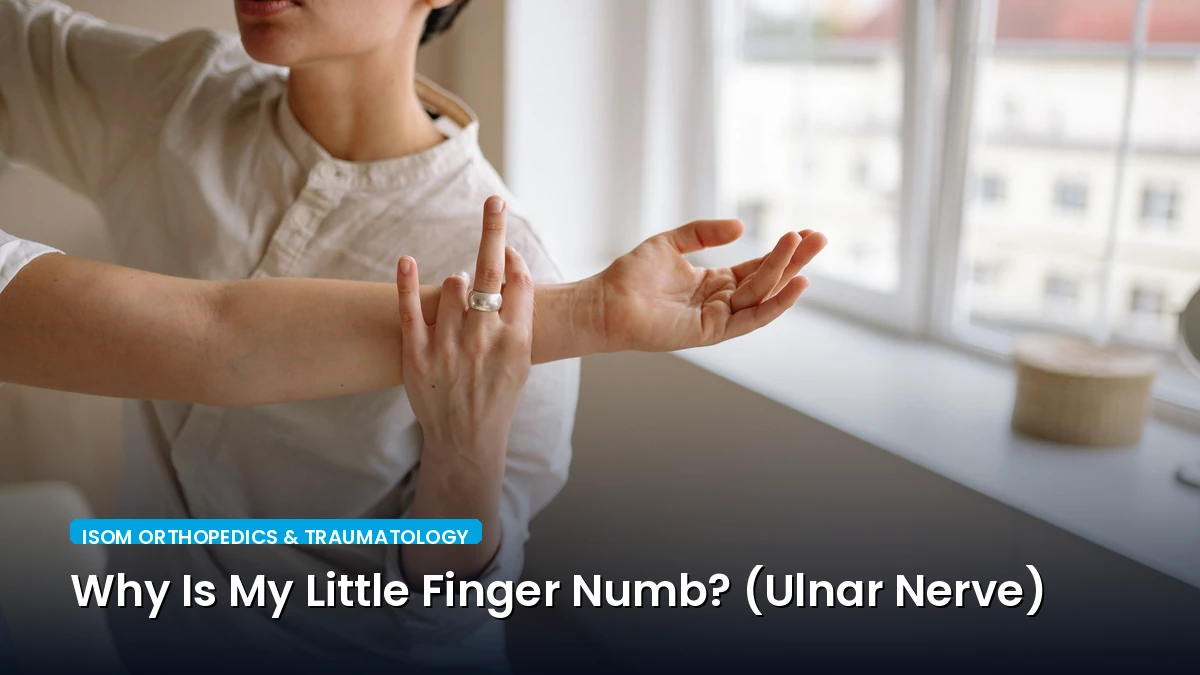
Numbness in the little finger is often related to pressure on the ulnar nerve, which supplies sensation to the little finger and part of the ring finger. Keeping the elbow bent, leaning on the elbow, or repeated hand use can increase symptoms. Weakness, persistent loss of feeling or an injury should be assessed.
Key Points
- Why: The ulnar nerve may be compressed or stretched near the elbow or wrist.
- At home: Avoid prolonged elbow flexion or pressure and rest the hand in a neutral position.
- Avoid: Do not rub the numb area forcefully or continue repeated gripping and vibration through symptoms.
- Assessment: Arrange an examination if grip becomes weaker, finger control changes or numbness persists.
Why can the little finger become numb?
Numbness in the little finger can occur when the nerve carrying sensation from that area is irritated or compressed. The ulnar nerve begins near the neck, travels through the shoulder and arm, passes through a narrow area on the inner side of the elbow, and continues toward the wrist along the inner forearm. Pressure or tension at any point can cause tingling in the little finger, the little-finger side of the ring finger, and the small-finger side of the hand.
Everyday triggers include leaning on the elbow, holding a phone with the elbow bent, sleeping with the arm under the body, or using a keyboard for a long period. Some people feel tingling only at the fingertip, while others describe an electric sensation spreading across the little-finger side of the hand. Numbness alone is not a diagnosis; duration, triggers and changes in strength are important.
A brief episode that fully settles after pressure is removed may be temporary. Repeated symptoms may mean that the nerve is being loaded again and again. Diabetes, thyroid problems, an earlier elbow injury, swelling around a joint or work that strains the hand may also be relevant during assessment.
Is the numbness coming from the elbow or the wrist?
The location of symptoms and the position that brings them on can help identify the level that needs attention. With ulnar nerve pressure at the elbow, symptoms may increase when the elbow is bent, with night waking or an electric feeling from the inner elbow toward the little finger. When pressure is closer to the wrist, altered feeling on the small-finger side of the hand and discomfort during gripping may be more noticeable.
This distinction cannot be made reliably at home. The same nerve can be affected at more than one level, and irritation of a nerve root in the neck can produce a similar pattern. Neck movement that increases symptoms, pain spreading down the arm or shoulder-area complaints should be included in the examination.
| Pattern | Area that may need assessment | Safe first step |
|---|---|---|
| Tingling in the little finger when the elbow is bent | Ulnar nerve passage at the elbow | Avoid keeping the elbow bent for long periods |
| Altered feeling on the small-finger side during gripping | Wrist and palm area | Keep the wrist neutral and reduce vibration |
| Numbness spreading with neck movement | Neck and nerve root | Stop the aggravating position and arrange assessment |
| Sudden loss of feeling or strength after injury | Nerve, bone and soft tissue | Seek prompt medical assessment |
The table gives direction rather than a diagnosis. Sensation, muscle strength and joint movement should be examined together to identify where the nerve is affected.
Which symptoms need urgent assessment?
Do not wait if little finger numbness begins suddenly with marked weakness, a visible hand deformity, severe injury pain, rapidly increasing swelling or a clear colour change in the fingers. Inability to move the hand, new widespread arm weakness or changes in speech and facial movement also require urgent assessment.
Numbness accompanied by difficulty opening a jar, turning a key, holding objects or spreading the fingers may indicate reduced motor nerve function. This matters even when pain is mild. Reduced sensation can also make it harder to notice a burn, a cut or a small wound on the hand.
If the symptom does not settle over several days, wakes you at night or returns with the same movement, plan an assessment in orthopaedics, traumatology or a hand-focused service. Note how long each episode lasts, which fingers are involved and whether grip strength has changed.
How is little finger numbness assessed?
The clinician asks when the symptom began, what work or sport you do, how you sleep, whether the elbow or wrist was injured, whether the neck is painful and whether other health conditions are present. Sensation in the little and ring fingers, the strength of small-finger-side hand muscles, finger spreading and grip are then compared. The elbow and wrist are checked for tenderness and position-related symptoms along the nerve pathway.
If needed, X-ray, ultrasound or magnetic resonance imaging can assess bone and soft tissue. Nerve conduction testing can show where signals slow down and how strongly the nerve is affected. Not every patient needs every test; the examination guides the choice.
Results are not interpreted from an imaging report alone. Symptoms and examination findings should support one another. This helps distinguish a short-lived positional pressure from a more persistent nerve problem and prevents unnecessary treatment.
What safe steps can be taken at home?
Start by identifying and reducing the position that brings on numbness. Avoid leaning on the elbow or armrest, and do not keep the elbow in a tightly bent position while using a phone or computer. During sleep, try not to place the arm under the body and keep the elbow in a relaxed position. These changes should make daily activity calmer, not force the arm into immobility.
Keep the wrist as neutral as possible, use vibrating tools for shorter periods and take breaks from repeated gripping. During a break, gently opening and closing the fingers is enough. Forceful stretching, rapid shaking or manoeuvres that increase tingling should be avoided.
Heat or cold is not required for every numbness problem. A numb area can be injured by very hot water, a heater or direct ice because reduced sensation may delay awareness of skin damage. If any application is considered, protect the skin, keep it brief and stop if sensation worsens. Medication changes, dosage advice or choosing a splint should be discussed with a clinician rather than decided from a general article.
Keep a brief record of which movement starts the symptom, how long it lasts, whether it occurs at night and whether grip feels weaker. This can help the examination show whether the problem is actually improving or only appearing at certain times.
When can normal hand use and work resume?
After reducing a task that aggravates the symptom, ordinary hand use can continue gradually if it does not increase numbness. The aim is not complete rest, but less repeated pressure on the nerve. If tingling becomes clearer, shorten the activity, take more frequent breaks and change the hand position.
Return to work or sport should follow an assessment when there is weakness, reduced finger control or repeated night waking. Jobs involving vibrating tools, prolonged elbow flexion or forceful gripping may need ergonomic changes. With reduced sensation on the small-finger side, take extra care around hot surfaces, sharp tools and situations in which a small injury might go unnoticed.
Even when symptoms improve, increase time and load slowly rather than returning directly to the same trigger. Repeated numbness, longer episodes or new weakness should prompt a planned review.
For related hand and finger information, read why a finger catches and trigger finger. For night symptoms around the wrist, see why the wrist becomes numb at night. These articles describe different patterns and do not replace a personal diagnosis.
Frequently asked questions about little finger numbness
Can little finger numbness go away on its own?
A brief positional episode may settle when pressure is removed. Repeated or prolonged numbness, especially with weakness, should be assessed rather than assumed to be temporary.
What does little finger numbness at night mean?
The elbow may stay bent during sleep, or the arm may be compressed. If the symptom is frequent, continues during the day or affects hand control, arrange an examination.
Is it safe to move the elbow when the little finger is numb?
Gentle movement through a comfortable range is usually different from forceful stretching. Stop any movement that increases tingling and ask for an individual assessment.
Should I massage a numb little finger?
Hard or prolonged massage may irritate the nerve, and reduced sensation can hide skin injury. Stop if light contact increases symptoms and seek advice.
When should I see a doctor for little finger numbness?
Seek care for persistent or repeated numbness, weaker grip, loss of finger coordination, injury, marked swelling or symptoms spreading up the arm.
Consult Our Orthopedic Specialists
Contact our medical team in Istanbul for questions about your diagnosis, surgical options, and appointment scheduling.