

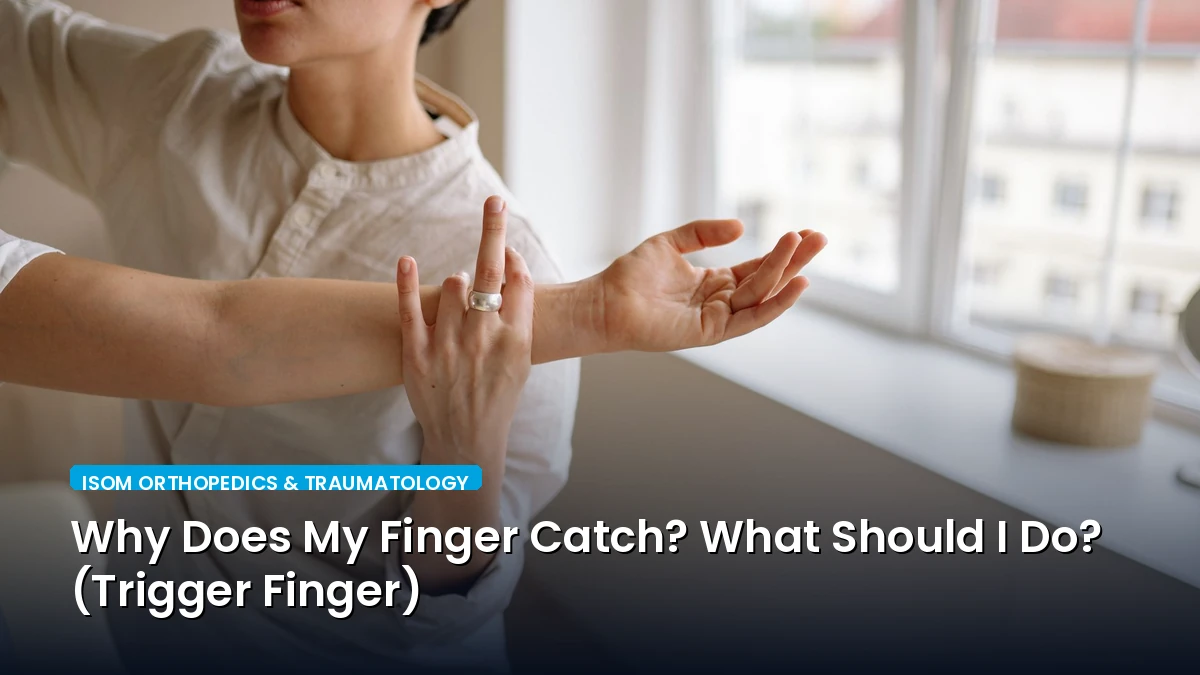
A finger that catches while bending, releases with a snap or feels tender near the palm may be affected by trigger finger. Reducing forceful gripping can help temporarily, but locking, swelling, numbness or difficulty with daily tasks calls for a hand and finger examination.
Key Points
- Why: Friction and thickening may develop around the tendon’s passage.
- At home: Reduce painful gripping and move the finger gently within a comfortable range.
- Avoid: Do not force the finger open, massage firmly or start medicine without advice.
- See a clinician: Seek assessment for locking, redness, warmth or persistent symptoms.
Why is my finger catching?
A finger that catches after bending, jumps open or briefly locks is often related to friction along the tendon’s passage. This is commonly called trigger finger and is known medically as stenosing tenosynovitis. A tendon moves the finger through a narrow sheath. When swelling or thickening develops around that passage, the tendon may not glide smoothly. People may notice morning stiffness, catching during gripping or a short period in which the finger needs help to straighten.
Symptoms vary. Some people have only a tender spot near the palm, while others need the other hand to release the finger. The affected finger, onset, activity pattern and any repetitive gripping are important details. Sudden pain after an injury, a visible deformity or an open wound requires a different assessment and should not automatically be labelled trigger finger.
Which signs suggest trigger finger?
The typical sign is an interruption in the smooth bend-and-straighten movement. Catching is often felt near the base of the finger at the palm. Stiffness may be stronger with the first movements of the day and can change as the hand is used. Clicking, a sudden release, or a finger that stays partly bent are common descriptions.
Where the pain occurs helps guide the examination. A small tender area in the palm and pain while opening a jar or carrying a bag can fit this pattern. Widespread numbness, colour change at the fingertip, weakness throughout the hand or pain traveling from the neck may point to another nerve, joint or soft-tissue problem. Those symptoms should be assessed rather than assumed to be trigger finger.
What can I do at home?
Start by reducing activities that repeatedly increase catching. Forceful squeezing, prolonged phone gripping, heavy bags, vibrating tools and repetitive fine hand work may aggravate symptoms in some people. Complete rest is not always necessary. Gentle opening and closing within a comfortable range can help maintain movement, but the finger should not be pulled forcefully straight.
A brief cool application may ease tenderness or swelling. Place a thin cloth between the skin and the cool source, and stop if the skin becomes numb, pale or painful. Avoid keeping the palm tightly closed while resting. A splint or tape is not suitable for everyone; a support that is too tight may affect circulation or increase stiffness.
Medicine choice, dose and duration depend on the person. Anyone with stomach, kidney, liver, bleeding or other health problems should not start a pain medicine without professional advice. Pregnancy, breastfeeding and regular medicines also matter. Home care is for reducing strain and observing the pattern. The trigger finger glossary page provides additional background.
Which activities can make it worse?
Activities that keep the finger tightly bent may increase friction around the tendon. Gripping sports equipment, tool use, knitting, intensive craft work, prolonged mouse use and repeated pinching can make symptoms more noticeable. This does not mean that every activity is forbidden. The useful step is to identify which task increases symptoms, reduce its intensity temporarily and return gradually as comfort improves.
Pulling the finger open, pressing hard over the painful area or repeatedly snapping it to make it move can irritate the tissues. Stop an exercise if it causes sharp pain, increased swelling or prolonged throbbing. A physical therapy assessment can examine hand use, gripping load and movement in the other fingers. ISOM’s rehabilitation service can help create a graded plan that protects movement without unnecessary strain.
What happens during an examination?
Diagnosis is often based on the history and hand examination. The clinician checks where catching occurs, tenderness along the tendon, active and passive motion, swelling and any lump. The finger is observed while bending and straightening. Grip, the movement of nearby fingers and sensation may also be checked.
Imaging is not needed in every case. An injury, bone tenderness, deformity, persistent swelling or another suspected condition may lead to an X-ray or ultrasound. Before the visit, note when symptoms started, which finger is affected, when they worsen and what you have already tried. The orthopedics and traumatology service can use this information to plan an appropriate assessment.
How is trigger finger treated?
Treatment depends on the frequency of catching, whether the finger locks, pain severity and the person’s daily needs. Mild symptoms may improve with activity changes, short periods of relative rest and controlled motion. In selected cases, a suitable night support may reduce positions that irritate the tendon. It should not be tight or cause colour, temperature or sensation changes.
If symptoms persist, a clinician may discuss an injection option when appropriate. This decision depends on examination findings, other conditions and previous care. An injection or procedure is not a home treatment. If the finger remains locked or other measures are not enough, surgery may be considered to release the tendon’s passage. The goal is safe motion and improved hand function.
After treatment, movement and grip function are followed. Return to work or sport should be gradual and based on pain and motion. Returning quickly to the same repetitive load may bring symptoms back. Exercises and loading advice from physiotherapy should be adapted to the individual.
When should I seek prompt assessment?
An acute change in shape, inability to move after significant injury or an open wound needs prompt assessment. Redness, marked warmth, rapidly increasing swelling, fever, a blue or pale fingertip and loss of sensation are also warning signs. If the finger is fully locked, do not force it straight.
A milder catching problem also deserves assessment when it interferes with daily life. Arrange a visit if morning stiffness is increasing, dressing or opening containers is becoming difficult, pain does not settle with rest or symptoms continue for several weeks. People with diabetes, inflammatory joint disease, previous hand trauma or another tendon problem may benefit from earlier review. Examination helps distinguish different causes that can feel similar.
Which response fits which situation?
| Situation | Common experience | First step | Assessment |
|---|---|---|---|
| Mild, occasional catching | Morning stiffness, brief snapping | Reduce load, gentle motion, observe | Planned review if it persists |
| Frequent catching and palm tenderness | Pain with gripping, difficult release | Reduce repeated squeezing and arrange review | Orthopedic or hand examination |
| Finger remains locked | Finger stays bent or is difficult to release | Do not force it, protect the finger | Assessment soon |
| Injury, colour change or fever | Severe pain, rapid swelling or sensory change | Do not perform home procedures | Prompt assessment |
FAQ: what should I know about a catching finger?
Can trigger finger settle on its own?
New, mild symptoms may improve when load is reduced. Repeated catching or locking should be assessed rather than watched indefinitely.
Should I force a catching finger open?
No. Forcing it may increase pain and irritation. Keep movement gentle and seek advice if it stays locked.
Is trigger finger the same as finger arthritis?
No. Trigger finger involves tendon gliding. Arthritis more often causes joint-line pain, stiffness and changes in joint motion.
Which clinician should I see?
An orthopedic and traumatology clinician can perform the initial assessment. Hand surgery or physiotherapy input may be added when appropriate.
Can trigger finger return?
Recurrence depends on personal risk factors and hand load. Gradual return to activity and early review of new catching can help manage the problem.
Consult Our Orthopedic Specialists
Contact our medical team in Istanbul for questions about your diagnosis, surgical options, and appointment scheduling.