


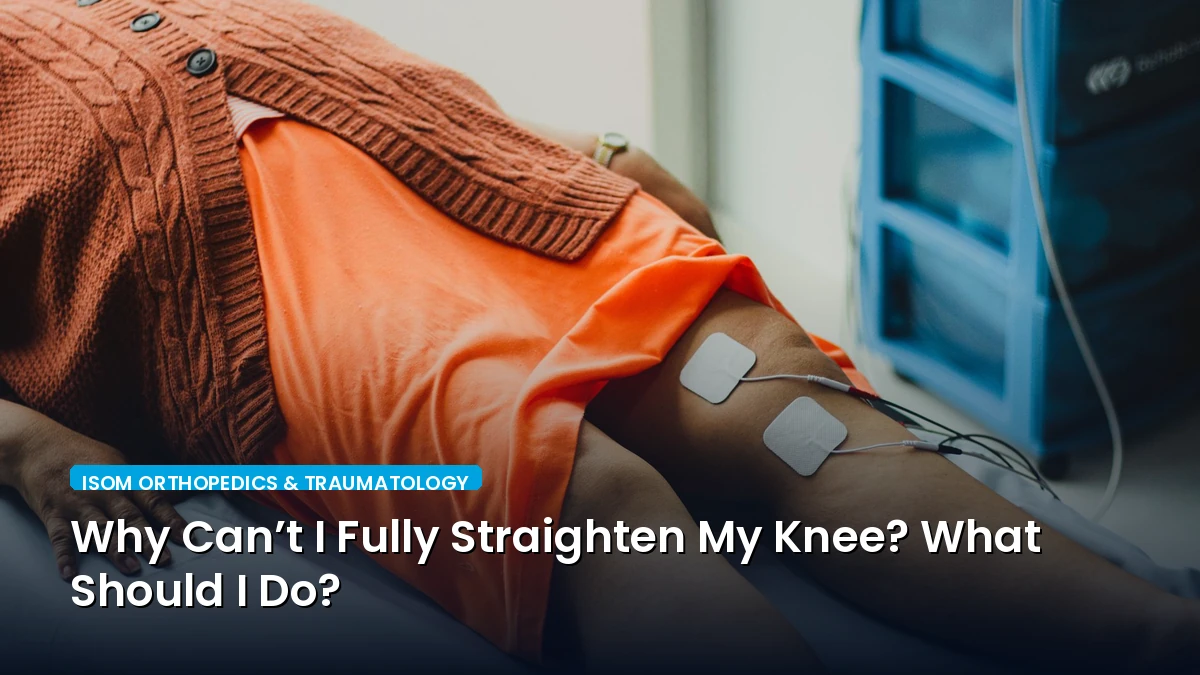
Do not force a knee straight when it does not fully extend. Swelling, pain, a meniscus problem or joint irritation may limit the final part of movement. A knee that remains restricted, locks, or cannot bear weight after an injury needs an orthopaedic examination so the next step can be chosen safely.
Key Points
- Possible causes Swelling, joint irritation, meniscus involvement or muscle guarding can reduce extension.
- At home Reduce aggravating load, keep the knee comfortable and consider brief protected cooling for swelling.
- Avoid Forcing the knee, deep squats and sudden twisting while movement is restricted.
- Seek care Get prompt assessment for injury-related loss of movement, rapid swelling, fever, redness or inability to bear weight.
Why will my knee not fully straighten?
Full extension may be limited by pain, swelling, muscle guarding or a mechanical problem inside the joint. The timing matters: a sudden change after a twist is different from stiffness that slowly appears after increased activity. A clinician also asks whether the knee catches, whether swelling appeared quickly, and whether the restriction is present at rest or only during walking.
Fluid inside the joint can increase pressure and make the final degrees of extension uncomfortable. The thigh muscles may then stay tense, keeping the knee slightly bent. This does not always mean a major injury, but persistent loss of movement should be assessed rather than repeatedly forced.
How can swelling and pain limit extension?
A swollen knee may feel tight around the joint and painful at the end of straightening. The location of swelling, warmth and tenderness helps guide the examination. Pain can also cause protective movement: a person shortens the step and avoids using the thigh muscle, which may increase stiffness over several days.
New swelling can follow a sprain, overuse, joint irritation or an internal injury. Redness, increased warmth and fever need prompt medical attention. If swelling improves but the knee still cannot straighten, an examination is useful because the remaining restriction may have a different cause.
Can a meniscus or ligament problem stop the knee from opening?
A meniscus injury can cause catching, pain with turning and difficulty reaching one particular position. Ligament injuries may bring swelling, a feeling of giving way and reluctance to load the leg. These signs do not establish a diagnosis by themselves. The injury mechanism, speed of swelling, stability and ability to walk are considered together.
A true locked knee may be difficult to both bend and straighten. Pain-limited movement is different because the person can often move farther when the irritation settles. Forcing either pattern can worsen symptoms. Movement loss after a fall, twist or sports injury should not be ignored.
What can I safely do at home?
The aim of home care is to preserve comfortable movement, not to push the knee into a painful position. Temporarily reduce load, elevate the leg if it is swollen and use protected cooling for a short period if it feels helpful. Do not place ice directly on the skin. Stop if the skin becomes numb or changes colour.
Avoid deep squats, kneeling, sudden turns and exercises that create sharp pain. Complete immobilisation can add stiffness, so gentle movement of the hip and ankle may be reasonable when comfortable. If the knee catches, is very swollen or cannot bear weight after an injury, exercise selection should wait for an examination.
Which symptoms need prompt assessment?
Rapid swelling, a changed knee shape, inability to bear weight or major loss of movement after an injury need prompt assessment. Fever with redness and warmth, new calf swelling, shortness of breath or marked general illness also require urgent medical attention. These signs have several possible explanations, so a clinician must assess them.
Arrange an appointment if the restriction persists, night pain disrupts sleep, walking becomes increasingly difficult or catching keeps returning. Note when the problem began, what movement triggered it, how swelling changed and which medicines are being used. This information helps the examination.
What may happen during an examination?
An orthopaedic assessment may include the range of motion, ligament stability, meniscus-related tenderness, thigh strength and walking pattern. The clinician compares the painful knee with the other side and identifies whether pain comes from the joint line, kneecap area or surrounding tissues.
An X-ray can assess bone alignment, joint space and some injury findings. Magnetic resonance imaging may be considered for menisci, ligaments or other soft tissues when it would change management. Imaging is selected according to the history and examination; not every restricted knee needs the same test.
How are treatment and rehabilitation planned?
Treatment depends on the cause. Temporary activity adjustment, swelling control, physiotherapy and gradual strengthening may help when the restriction follows irritation or muscle guarding. A meniscus or ligament problem requires consideration of stability, activity demands, age and daily goals. More advanced joint changes or repeated mechanical symptoms may lead to a different discussion.
Rehabilitation often begins with swelling and pain control, then restores comfortable extension, thigh activation, balance and everyday movement. Stairs, squatting, running and turning are added gradually when movement quality returns. A programme should follow the examination rather than copying another person’s exercises.
| Finding | Possible explanation | Early approach | Assessment |
|---|---|---|---|
| Mild stiffness without injury | Guarding or temporary irritation | Comfortable movement and reduced load | Book an appointment if persistent |
| Swelling and painful final extension | Joint fluid or internal irritation | Rest and protected cooling | Orthopaedic review |
| Catching and sharp pain with turning | Meniscus or mechanical involvement | Avoid twisting and deep bending | Prompt review |
| Unable to bear weight after injury | Bone, ligament or joint injury | Do not load the leg | Same-day assessment |
For related information, see orthopaedics and traumatology, arthroscopic and sports injury care and rehabilitation services.
FAQ: What should I know about a knee that will not straighten?
Should I wait if there is no pain?
Painless new movement loss still deserves attention if it does not improve within a few days, especially when the knee catches or feels blocked.
Should I push the knee straight with my hands?
No. Forced pressure can increase irritation. The safe movement range should be guided by the examination and symptoms.
Will extension return when swelling settles?
It may, but persistent restriction after swelling improves should be reviewed because more than one process can limit movement.
Which specialist should I see?
An orthopaedic and traumatology clinician is a suitable starting point. Physiotherapy may be added when the examination supports it.
When can I return to exercise?
Return is gradual when walking is comfortable, swelling is controlled, movement is adequate and the clinician considers the load appropriate.
Consult Our Orthopedic Specialists
Contact our medical team in Istanbul for questions about your diagnosis, surgical options, and appointment scheduling.