


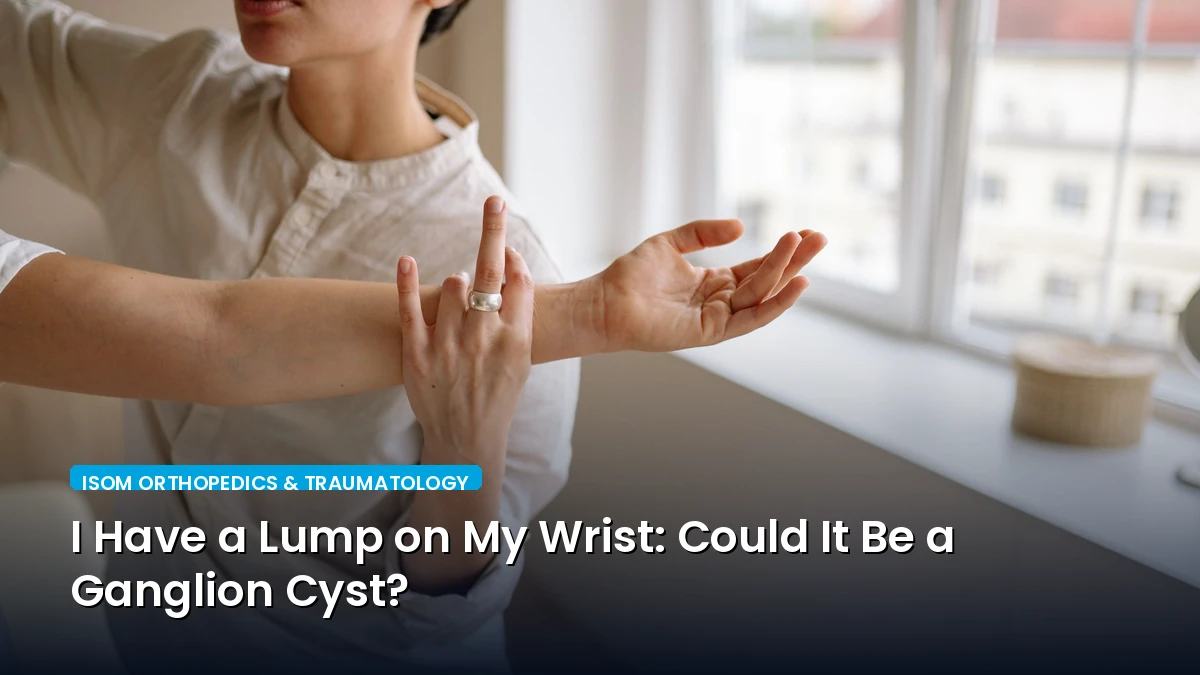
A round lump under the wrist skin may be a ganglion cyst arising near a joint or tendon sheath. Its size can change with movement, and it may cause pressure, pain, or numbness. Assessment is important if it grows quickly, becomes hard, turns red, or follows an injury.
Key Points
- Cause: A ganglion is a fluid-filled bulge beside a joint or tendon sheath; its exact cause may be unclear.
- At home: Do not squeeze the lump, reduce wrist strain, and observe changes in size and symptoms.
- Avoid: Do not hit it, puncture it, or press firmly to make it disappear.
- Seek care: Arrange assessment for pain, numbness, weakness, redness, warmth, rapid growth, or restricted motion.
A wrist lump can change the way a person uses the hand. It may appear on the back of the wrist, on the palm side, or near a finger joint. It can be difficult to see when small, more visible during activity, or less prominent after rest. This pattern can occur with a ganglion cyst, but every lump has the same appearance only superficially.
The onset, growth rate, firmness, mobility, relation to movement, and nearby nerve symptoms help guide assessment. A bruise after impact, tendon sheath problem, joint prominence, infection, or another soft tissue mass can look similar. Puncturing or forcefully pressing the area at home is therefore unsafe.
Why does a ganglion cyst form on the wrist?
A ganglion cyst is a sac filled with thick joint-like fluid near a joint or tendon sheath. It may develop through a weak point in the joint capsule or surrounding connective tissue. Many people have no clear single cause. Repeated wrist loading, earlier minor strain, or changes in joint pressure may make the lump more noticeable.
The presence of a cyst does not automatically mean severe joint damage. Some remain painless and stable for a long time. Others create pressure during gripping, wrist bending, or leaning on the hand. Cysts on the back of the wrist are common, but a lump on the palm side also needs a proper examination.
How can a ganglion cyst be recognized?
A ganglion often feels smooth, round, or oval and may change size with wrist position. Bending the wrist, gripping, or placing pressure on the hand can hurt when the cyst lies close to a joint. Pressure on a nerve may cause tingling, numbness, or weakness in certain fingers.
The examination considers location, movement, skin attachment, tenderness, and wrist motion. Ultrasound can show whether the lump contains fluid and how it relates to a tendon. An X-ray can assess bone and joint structure. The test is selected according to the lump rather than used automatically for every swelling.
When can a wrist lump cause pain?
A lump close to a joint capsule or tendon sheath may press on nearby tissues during motion. Opening a jar, typing, carrying weight, and holding the wrist bent for a long time can increase discomfort. Direct pressure over the lump may also hurt. Pain intensity does not always match the cyst size.
| Finding | What it may suggest | Useful approach |
|---|---|---|
| Round lump that changes with motion | Joint or tendon-related cyst | Examination and ultrasound when needed |
| Bruising after injury | Bleeding or ligament strain | Assessment without pressing the swelling |
| Redness and warmth | Inflammatory or infectious process | Prompt medical evaluation |
| Numbness and weakness | Possible nerve pressure | Orthopedic and nerve assessment |
What should I do at home if I have a wrist lump?
Do not squeeze, strike, or press the lump with a hard object. These actions can injure the skin, capsule, or tendon and may introduce infection. Record its size, pain, and relation to movement. Divide repetitive wrist tasks into shorter periods, share loads between both hands, and avoid holding the wrist bent for long periods.
Brief cold application through cloth may help pain. Stop if the skin becomes numb or changes color. A tight bandage can affect circulation. A wrist support should be fitted appropriately and used for a clear reason rather than as a way to force the lump down.
A lump that becomes smaller does not prove that it was a ganglion. A recurrent, painful, or nerve-related swelling still needs assessment. Creating a hole in the skin or draining it at home increases the risk of infection and injury.
When should a wrist lump be examined?
A lump that grows quickly, becomes hard and fixed, causes marked pain, or appears after trauma should be assessed. Redness, warmth, discharge, fever, finger numbness, loss of grip, a cold hand, or color change are earlier warning signs. Marked loss of wrist motion should not be ignored.
Even a small painless lump can be examined when its appearance changes, interferes with work, or causes concern. Orthopedic assessment considers its joint or tendon relationship, nerve pressure, and other possible masses. Correct identification comes before any procedure.
How is a ganglion cyst treated?
A small cyst without symptoms may be observed. During observation, size, pain, and wrist function are monitored. Reducing painful loads and following a rehabilitation plan can be enough for some people. A physiotherapist can assess surrounding muscle control and daily hand use to distribute load more evenly.
If symptoms continue, the clinician discusses options based on location and contents. Aspiration may be used for selected cysts, but recurrence can occur and the procedure must be performed in sterile conditions. Surgery may be considered for persistent pain, nerve pressure, recurrence, or functional limitation. Not every wrist lump needs the same procedure.
Information about orthopedics and traumatology services is available for wrist assessment. General protection advice can be found in the hand and wrist guide. Ongoing pain and motion limits can also be discussed through sports injury and arthroscopic care.
How should the wrist be used after ganglion treatment?
Return to activity depends on the cyst location, treatment method, and work demands. Early on, avoid sharp pain with gripping and movements that load the wrist. Later, try light daily tasks for short periods. If pain and swelling are not clearly worse the next day, increase the duration gradually.
A bent wrist at work, repeated gripping, and heavy carrying can bring symptoms back. Adjust the keyboard, mouse, and work surface so the wrist can remain neutral. Stop exercises for numbness, weakness, or sharp pain. Rehabilitation aims to protect hand function as well as the appearance of the lump.
Frequently asked questions about a wrist ganglion cyst
Can a ganglion cyst disappear on its own?
Some small cysts become less visible or smaller over time. A growing, painful, recurrent, or nerve-related lump should still be assessed.
Is it safe to hit a ganglion cyst?
No. Hitting it can injure the skin, capsule, and tendons and may increase the risk of infection or swelling. It should not be punctured or drained at home.
Can a ganglion cyst cause pain and numbness?
Pressure on nearby tissues may cause pain, tingling, or numbness. Progressive numbness or weakness should be assessed by an orthopedic clinician.
Which department assesses a wrist lump?
Orthopedics and traumatology can assess wrist bones, joints, tendons, and soft tissue lumps. Physical therapy and rehabilitation may be added when useful.
Does a ganglion cyst require surgery?
Not every cyst needs surgery. Surgery may be considered for selected cases with functional limitation, nerve pressure, persistent pain, or recurrence despite suitable care.
Consult Our Orthopedic Specialists
Contact our medical team in Istanbul for questions about your diagnosis, surgical options, and appointment scheduling.