


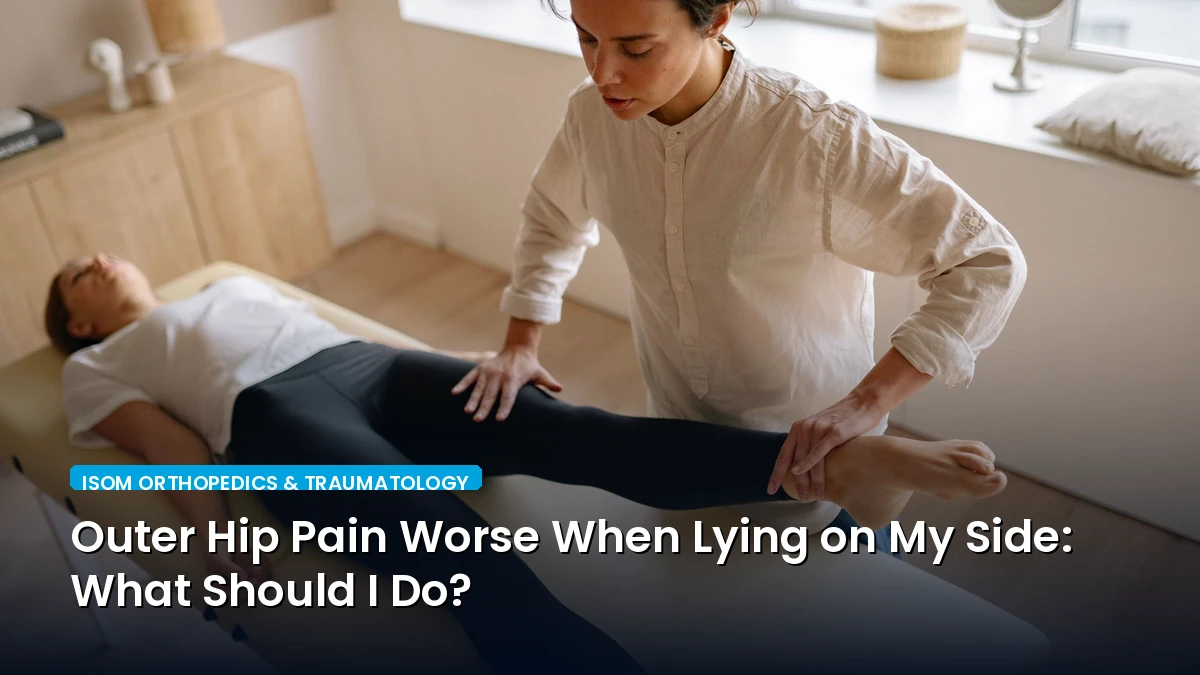
Outer hip pain that becomes worse when lying on the painful side may come from irritated tendons, a sensitive bursa, or nearby muscles. Reducing pressure and keeping gentle movement can help. A fall, fever, marked swelling, inability to bear weight, or new numbness requires medical assessment.
Key Points
- Why: Outer hip pain may involve tendon overload, bursa irritation, muscle strain, or pain referred from the lower back.
- At home: Avoid lying on the painful side, keep comfortable short walks, and temporarily reduce aggravating tasks.
- Avoid: Do not force deep squats, prolonged one-sided loading, or painful deep massage.
- Assessment: Arrange an orthopaedic review if pain persists or follows a fall, fever, numbness, or inability to bear weight.
Why does my outer hip hurt?
Outer hip pain is felt on the side of the hip and may spread along the outside of the thigh. It can become worse when climbing stairs, walking for a long time, standing on one leg, or lying on the painful side. The source is often the tendons, muscles, or bursa around the hip rather than the centre of the hip joint.
Location alone cannot identify the cause. Deep groin pain may involve the hip joint, while burning or tingling from the lower back toward the leg may reflect nerve-related pain. A tender point on the outside of the hip needs a different assessment. The timing, triggering activity, sleep effect, and change in walking pattern all matter.
A new walking route, hills, running, prolonged standing, or repeated loading can irritate the tissues outside the hip. Symptoms may also begin without a single injury when daily loads add up. Age, previous hip problems, back symptoms, and activity level help guide the examination.
Why is hip pain worse when lying on my side?
Lying on the painful side places direct pressure on the outer hip tissues. An irritated tendon or bursa may hurt during sleep, turning in bed, getting dressed, or rising from a chair. Night pain by itself does not prove a serious joint problem, but persistent sleep disturbance deserves assessment.
The upper leg may also fall inward during sleep and increase tension around the outer hip. A comfortable pillow between the knees can reduce this tension for some people. It should not be used to force a painful position; comfort and relaxed breathing are the goal.
Pain that does not settle with rest, becomes progressively stronger, or occurs with fever, unexplained weight loss, or marked fatigue should not be managed only at home. Arrange medical review without unnecessary delay.
Which symptoms suggest an outer hip soft-tissue problem?
Pain that increases with stairs, side steps, longer walks, or single-leg standing can involve the tendons and nearby soft tissues. Local tenderness, difficulty lying on that side, and aching along the outer thigh can occur. Deep groin pain, catching, or a clear loss of hip motion may point toward an issue inside the joint.
Lower-back pain can be felt around the outer hip. If symptoms change with back movement or travel down the leg with tingling, burning, or numbness, the back and nerves should also be examined. Knee symptoms can alter walking and increase hip load, so the whole movement chain matters.
| Pattern | Possible explanation | First step |
|---|---|---|
| Outer pain worse with side lying and touch | Tendon or bursa sensitivity | Reduce pressure, keep comfortable movement, and seek review if it persists |
| Deep groin pain with restricted motion | Hip joint-related condition | Reduce load and arrange an orthopaedic assessment |
| Pain from the back with tingling or burning | Referred pain from the back or a nerve | Seek clinical assessment for neurological symptoms |
| Severe pain and inability to bear weight after a fall | Possible fracture or significant injury | Seek urgent medical assessment |
What can I do at home?
The first step is to modify the painful load rather than remain completely still. Avoid lying on the painful side and turn slowly when getting out of bed. Short, comfortable walks on level ground often help maintain movement. If pain remains noticeably worse after walking, reduce the distance and pace.
Temporarily reduce deep squats, repeated low-chair rises, long uphill walks, side jumps, and prolonged single-leg standing. Try not to shift all your weight onto one leg while working. Forceful stretching, hard roller pressure, or deep massage over a tender spot may irritate the tissue further.
Cool or warm applications may feel helpful for some people. Protect the skin and stop if there is burning, numbness, or a colour change. Medication decisions should account for other conditions and regular medicines and should be discussed with a clinician or pharmacist rather than copied from a general article.
When should I see an orthopaedic clinician?
Arrange an appointment if pain is not improving after several days, repeatedly interrupts sleep, changes your walking, or limits ordinary tasks. The examination may include the hip and back range of motion, muscle strength, walking pattern, and tender areas. Imaging is selected when it adds useful information; the same test is not needed for every outer hip complaint.
Severe pain after a fall, inability to bear weight, a shortened or visibly altered leg, fever with redness or swelling, rapidly increasing pain, new weakness, or changes in bladder or bowel control require urgent assessment. Do not wait with home exercises or massage when these warning signs are present.
For general information about hip osteoarthritis, see the hip osteoarthritis treatment guide. For orthopaedic options in the hip region, see the hip orthopaedics service page. These pages do not replace an individual examination.
How is treatment and recovery planned?
Treatment depends on the source of pain and its effect on daily activity. Load management, movement changes, and physiotherapy may be considered first. A physiotherapist can assess hip strength, pelvic control, balance, and walking mechanics, then build a gradual programme. Exercise should not create a lasting increase in symptoms.
For tendon sensitivity, the goal is not to avoid using the hip forever but to increase capacity step by step. The programme may address the hip muscles, trunk control, and balance together. A back or joint problem may coexist, so treating only the tender spot may not be enough. Progress is reviewed and daily load is adjusted.
Imaging findings are interpreted with the symptoms and examination. A finding on a scan may not be the pain source. Decisions should therefore consider function, clinical signs, activity goals, and the response to a sensible rehabilitation plan.
Frequently asked questions
Can outer hip pain go away on its own?
Mild pain linked to a recent increase in load may settle after pressure and aggravating activity are reduced. Persistent or returning pain should be assessed to understand the loading pattern and contributing factors.
Is walking safe with outer hip pain?
Short walks that do not clearly worsen symptoms can maintain movement. Reduce the load and seek review if limping becomes marked, pain stays worse for a long time after walking, or weight bearing becomes difficult.
How should I sleep if side lying hurts my hip?
Avoid the painful side, try lying on your back, or place a comfortable pillow between the knees when lying on the other side. Do not force any position that increases pain.
Can outer hip pain come from the back?
Yes. Pain from the lower back or a nerve may be felt around the outer hip. Numbness, burning, electric sensations, or weakness in the leg need clinical assessment.
Which clinician should assess pain on the outside of the hip?
An orthopaedic clinician is a reasonable starting point. The examination may lead to physiotherapy, neurology, or another specialty depending on the findings.
Consult Our Orthopedic Specialists
Contact our medical team in Istanbul for questions about your diagnosis, surgical options, and appointment scheduling.