


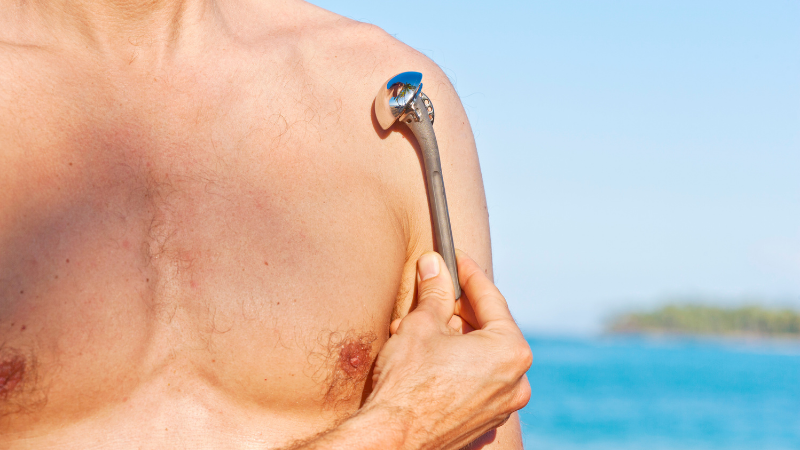
Definition and Purpose of Shoulder Replacement
What Is a Shoulder Replacement?
A shoulder replacement is a surgical treatment method in which a damaged shoulder joint is replaced with artificial components. Due to wear and tear occurring over time on the joint surface, trauma, or rheumatic diseases, the shoulder joint loses its function, leading to severe pain, limited mobility, and a reduced quality of life for the patient. A shoulder replacement is performed to eliminate these problems and allow the patient to continue daily activities more comfortably.
Shoulder Replacement: Primary Goal of Surgery
The main objective of a shoulder replacement is to relieve the patient's pain, increase the range of joint motion, and achieve a functional shoulder joint. Individuals who are unable to carry out basic daily needs such as dressing, combing their hair, or eating regain their independence thanks to this surgery.
Shoulder Replacement: Who Is It Suitable For?
This surgery is generally suitable for individuals with advanced shoulder osteoarthritis, those who have lost joint function due to a rotator cuff tear, or whose shoulder joint has suffered irreparable post-traumatic damage. In addition, shoulder replacement is also preferred in conditions where the blood supply to bone tissue is impaired, such as avascular necrosis.
Types of Shoulder Replacement
Total Shoulder Replacement
In total shoulder replacement, both the humeral head (the ball of the upper arm bone) and the glenoid (the socket of the shoulder blade) are replaced with artificial components. This method is especially preferred in patients with widespread joint damage and advanced osteoarthritis. Following surgery, the vast majority of patients are relieved of their pain and can use their shoulder joint much more comfortably.
Partial (Hemi) Shoulder Replacement
In partial shoulder replacement, only the humeral head is replaced. It is generally applied in cases where the socket remains intact and only the head of the upper arm bone is damaged. This method is especially beneficial in comminuted fractures or partial joint damage.
Reverse Shoulder Replacement
In reverse shoulder replacement, the natural anatomy of the shoulder joint is altered so that the ball and socket switch positions. This shifts the movement of the shoulder primarily to the deltoid muscle. In situations where the rotator cuff muscles have lost their function—that is, when the muscles that provide shoulder stability no longer work—reverse shoulder replacement is the most effective treatment option.
Shoulder Replacement Surgical Process and Recovery
Preoperative Preparation
Prior to surgery, a detailed medical history is taken from the patient, a physical examination is performed, and the condition of the joint is evaluated using imaging methods such as X-ray or MRI. The appropriate type of prosthesis is determined based on these evaluations.
How the Surgery Is Performed
Performed under general anesthesia, the surgery takes an average of 1-2 hours. The surgeon cleans the damaged joint surfaces and places artificial prosthetic components of appropriate size in their place. The success of the operation depends on positioning the prosthesis at the correct angle and with the proper size.
Postoperative Period and Recovery
After surgery, the patient stays in the hospital for a few days. While an arm sling is used during the first few weeks, joint mobility is gradually increased through physical therapy programs. Within an average of 3-6 months, patients can return to daily activities, resume their work, and largely regain shoulder functions.
Advantages and Risks of Shoulder Replacement
Advantages
-
Significant reduction in chronic shoulder pain,
-
Ability to perform daily activities independently,
-
Increased range of joint motion,
-
A higher quality and more comfortable life.
Potential Risks of Shoulder Replacement
As with any surgical procedure, shoulder replacement also carries certain risks. These include infection, bleeding, loosening of the prosthesis, nerve damage, and limited joint motion. However, these complications can be minimized with regular follow-up and physical therapy.
Long-Term Success
Following shoulder replacement surgery, the vast majority of patients achieve long-term relief. The lifespan of prostheses is on average 15-20 years, and most patients maintain a pain-free and functional shoulder throughout this period.
Conclusion
Shoulder replacement is an effective and reliable treatment method for patients with severe joint damage who experience serious limitations in daily life. With proper patient selection, an experienced surgeon, and a disciplined rehabilitation process, this surgery significantly enhances individuals' quality of life.
To get to know us better and access our other content, you can visit the Home, About Us, and Contact pages on our website, and you can also follow our Instagram account for our most up-to-date posts.