


A meniscus tear is a split in the C-shaped cartilage cushion of the knee. Small or degenerative tears often settle with physiotherapy, while locking, a repairable tear or symptoms that persist may need arthroscopic repair or partial removal. İSOM treats meniscus injuries in Istanbul, Turkey, and plans rehabilitation with each patient.
Key Points
- Who it helps: people with joint-line knee pain, catching, swelling or a knee that locks after a twist or with age-related wear.
- Before surgery: examination, an MRI where needed, and a trial of physiotherapy for many degenerative tears.
- Recovery: walking within days; running usually from about 6 weeks after a trim, and about 4 to 6 months after a repair.
- In Istanbul: send your MRI and reports before the consultation and plan the first follow-up visits before flying home.
What is the meniscus and what does it do in the knee?
The menisci are two C-shaped pads of fibrocartilage that sit between the thigh bone (femur) and the shin bone (tibia). Each knee has a medial meniscus on the inner side and a lateral meniscus on the outer side. The word "meniscus" simply means "crescent" in Greek, which describes their shape.
Their job is mechanical. They spread body weight across a wider area of the joint, absorb shock, help the knee stay stable as it bends and twists, and contribute to joint lubrication. When a meniscus is torn or removed, the cartilage that covers the bone ends has to carry more load per square centimetre, which is why meniscus health matters for the long-term life of the knee.
A meniscus has a limited blood supply. The outer rim, often called the red zone, is well supplied and can heal after repair. The inner part, the white zone, has almost no blood supply and rarely heals by itself. This single fact explains most treatment decisions described below.
What causes a meniscus tear and what are the symptoms?
Meniscus tears come from two different situations. In younger and sporty people, a tear usually follows a twist with the foot planted, a pivot, a deep squat under load or a direct impact, often in football, basketball, skiing or tennis. In people over about 40, the meniscus gradually loses water and elasticity, and a minor movement such as standing up from a squat or stepping off a kerb can be enough to split it.
Typical symptoms are:
- Pain along the joint line: on the inner or outer edge of the knee, worse with twisting, squatting and stairs.
- Swelling: usually builds over several hours to a day after the injury, not instantly.
- Catching or clicking: a sensation that something is getting in the way of smooth movement.
- Locking: the knee will not fully straighten, or will not bend, until you wiggle it free.
- Giving way: a feeling of instability, although a feeling of the knee collapsing more often points to a ligament problem.
A knee that is truly stuck and cannot be straightened needs an examination within days, because a displaced fragment may be blocking the joint. Severe swelling, a hot red knee with fever, or inability to bear weight after an injury also need prompt medical assessment.
How is a meniscus tear diagnosed, and what do the grades mean?
Diagnosis starts with the story of the injury and a physical examination. The doctor checks swelling, joint-line tenderness, range of motion and uses manoeuvres such as the McMurray and Thessaly tests, then examines the ligaments, because meniscus and anterior cruciate ligament injuries often occur together. A plain X-ray does not show the meniscus, but it helps assess joint space and arthritis. MRI is the usual imaging test.
MRI reports often mention "grades". These describe signal changes inside the meniscus, not how bad your pain is:
| MRI grade | What it describes | Usual approach |
|---|---|---|
| Grade 1 | Small spot of increased signal inside the meniscus, not touching the surface. Often an early degeneration sign. | Not a true tear. Activity guidance and strengthening if symptoms exist. |
| Grade 2 | Linear signal inside the meniscus that still does not reach the surface. | Not a tear in the strict sense. Observation and physiotherapy. |
| Grade 3 | Signal that reaches the upper or lower surface, which means a real tear. | Depends on tear type, location, age and symptoms: physiotherapy first or surgery. |
The shape of the tear matters as much as the grade. Radial, horizontal, bucket-handle, flap and root tears behave differently, and your surgeon will explain which one you have and whether it lies in the red or the white zone.
Can a torn meniscus heal without surgery?
Sometimes. A meniscus tear can settle without an operation when it is small, stable and located in the well-supplied outer zone, or when it is a degenerative tear that behaves like a sprain. A tear in the inner white zone will not usually knit back together, but it can still stop hurting if the knee is strengthened and the frayed edge does not catch.
Treatment without surgery generally means:
- relative rest from twisting and deep-squatting activity for a few weeks, with an ice or compression routine for swelling;
- anti-inflammatory medication only as advised by your doctor;
- physiotherapy to restore full movement and strengthen the quadriceps, hamstrings and hip muscles;
- a gradual return to walking, cycling and swimming before running or pivoting sport;
- in selected cases, an injection-based option discussed after examination.
Many people notice clear improvement within 6 to 12 weeks. If pain, catching or giving way persists after a well-run physiotherapy programme, or if the knee locks, surgery becomes a reasonable next step.
When is meniscus surgery recommended, and which operation is used?
Surgery is considered when the knee locks, when a clearly repairable tear is found in a younger or active person, when mechanical symptoms continue despite physiotherapy, or when a tear accompanies a ligament injury that is being reconstructed. Two main operations exist, and they have different aims.
| Meniscus repair (suture) | Partial meniscectomy (trimming) | |
|---|---|---|
| Aim | Stitch the torn meniscus so it heals and keeps its function | Remove only the unstable torn fragment and smooth the edge |
| Suited to | Fresh tears in the red zone, bucket-handle and root tears, often in younger people or alongside ACL surgery | Tears in the white zone, frayed or degenerative tears, complex tears that cannot be held by stitches |
| Early recovery | Slower: protected weight-bearing and limited bending for several weeks | Faster: walking within days |
| Return to sport | About 4 to 6 months | About 6 to 8 weeks for most people |
| Long-term view | Preserves meniscus tissue and its cushioning role | Less tissue means more load on the cartilage over time |
The guiding principle in modern practice is to save as much meniscus as possible. Total removal is rarely performed today. Meniscus transplantation from a donor is a specialised option for selected younger patients who have lost most of a meniscus and have persistent pain, and it is not a routine alternative to repair.
How is arthroscopic meniscus surgery performed?
Both repair and partial meniscectomy are carried out arthroscopically, which means through two or three small cuts of about a centimetre rather than an open incision. A thin camera shows the inside of the knee on a screen, and fine instruments are used to trim or stitch the meniscus. Spinal or general anaesthesia is chosen with the anaesthetist according to your health and preference.
The surgeon first inspects the whole joint, including cartilage and ligaments, and then treats the tear. A trim often takes around 30 to 45 minutes, and a repair may take longer. Many patients go home the same day or the next day with a bandage, advice on swelling control and a physiotherapy plan. Crutches are used for a short time after a trim and for longer after a repair, depending on the stitch pattern.
Before surgery you will be asked about medications, allergies and previous operations, and you may be told to stop blood-thinning medicines in advance. Follow the instructions you receive, as they depend on your own medical history.
What is recovery like after meniscus surgery?
Recovery depends mainly on which operation was done. The table gives a typical outline; your surgeon and physiotherapist adjust it to your knee.
| Phase | After partial meniscectomy | After meniscus repair |
|---|---|---|
| Days 1 to 7 | Walk with or without crutches, elevate, ice, ankle pumps and gentle bending | Brace or limited weight-bearing as instructed, early gentle movement within allowed range |
| Weeks 2 to 6 | Full range of motion, stationary cycling, strengthening, return to desk work | Weight-bearing increases gradually, bending is limited at first, wound check and stitches out |
| Weeks 6 to 12 | Jogging and straight-line running usually start, sport-specific drills | Strength and balance work, cycling and swimming, running not yet |
| Months 3 to 6 | Return to full sport for most people | Running progression, then sport-specific training; return to pivoting sport at roughly 4 to 6 months |
Swelling that fluctuates with activity is normal for several weeks. Physiotherapy is not optional: quadriceps strength is the strongest predictor of how the knee feels afterwards. Desk workers often return to work within one to two weeks, while jobs that involve kneeling, climbing or heavy lifting take longer.
What are the risks, and how long do the results last?
Arthroscopic meniscus surgery is a common and generally safe operation, but no surgery is free of complications. Possible problems include infection, stiffness, a clot in a leg vein, irritation of a small skin nerve, persistent pain, and in the case of repair, the stitches failing so that the tear reopens. Your surgeon will explain the risks that apply to you before you consent.
How long the result lasts depends on the tear and the knee as a whole. A successful repair in a stable knee can last for many years. After a trim, the knee often feels much better quickly, yet the joint carries somewhat more load, and people who already have cartilage wear may develop arthritis sooner. For that reason, surgery is not the first choice for every degenerative tear, and weight management and muscle strength remain important after the operation.
Treatment in Istanbul for international patients
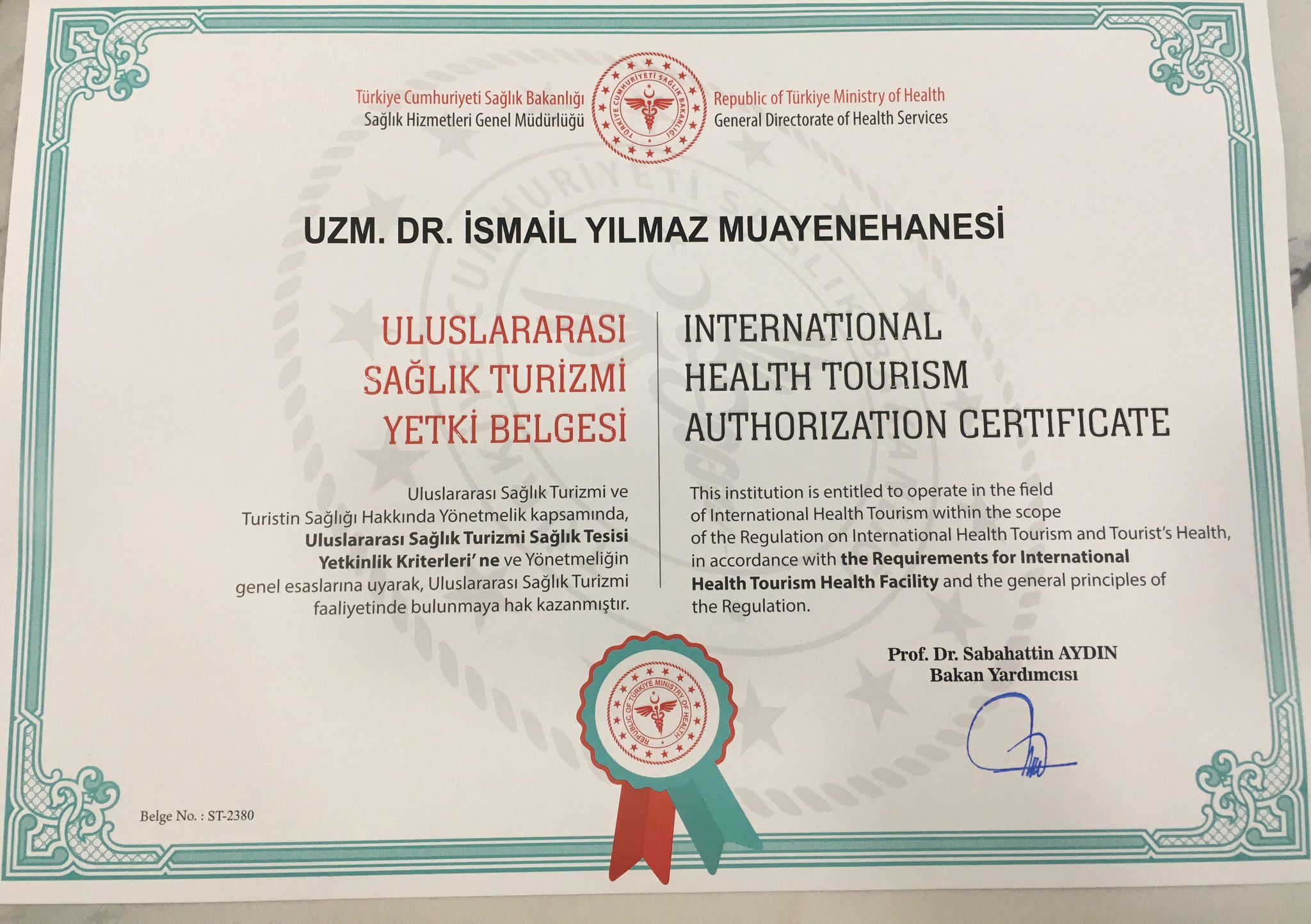
İSOM Orthopedics is based in Levent, Beşiktaş, on the European side of Istanbul. The center was founded in 2000 by Dr. İsmail Yılmaz and has about 25 years of clinical experience, with orthopedics, traumatology and physiotherapy departments working under one roof. For a meniscus problem, this means that examination, imaging review, surgery planning and rehabilitation can be coordinated in one place.
Some practical guidance if you are travelling from abroad:
- Before you travel: contact İSOM by phone at +90 (212) 324 0 324 or by WhatsApp at +90 (533) 479 63 38, and send your MRI report, the images on disc or by link, previous operation notes and a list of current medicines.
- Consultation: the surgeon examines the knee, reviews imaging and may request new images. Not every patient needs an operation, and a conservative plan is a legitimate outcome.
- How long to stay: a simple arthroscopy often needs a few days to about a week in the city for the operation, wound check and first physiotherapy sessions. A repair may need a longer stay or a plan for supervised rehabilitation at home.
- Flying home: ask your surgeon when it is safe to fly. Long flights raise the chance of leg clots, so walking, hydration and any advised preventive measures matter.
- After returning home: bring a written operation summary and rehabilitation plan for your local doctor and physiotherapist, and arrange follow-up so that progress is checked at the right intervals.
Related articles
Understanding the injury
- What is a meniscus tear: diagnosis and treatment process: a step-by-step overview from first examination to treatment choice.
- What causes a meniscus tear: the movements, age changes and risk factors behind tears.
Symptoms and grades
- Meniscus tear symptoms: pain, swelling, catching and locking explained.
- How to recognize a meniscus tear: everyday signs and when to see a doctor.
- Meniscus tear symptoms, stages and treatment options: how severity guides the plan.
- Meniscus tear grades: what to do at each stage.
Surgery or no surgery
- Can a meniscus tear heal without surgery: when conservative care works.
- Does a meniscus tear require surgery: signs that point towards an operation.
- Meniscus tear surgery: techniques, preparation and recovery.
Exercise and treatment abroad
- Meniscus tear exercises: a step-by-step strengthening guide.
- Meniscus tear in Istanbul: symptoms, treatments and where to get treated.
Related treatments
- Sports injuries and arthroscopic surgery: keyhole surgery principles for knees, shoulders and other joints.
- Cruciate ligament injuries: ACL tears often occur together with meniscus tears.
- Rehabilitation: structured recovery after surgery or injury.
- Physiotherapy: strengthening and movement programmes for non-surgical care.
Frequently Asked Questions
Consultez Nos Spécialistes en Orthopédie
Contactez notre équipe médicale à Istanbul pour toute question concernant votre diagnostic, vos options chirurgicales et la prise de rendez-vous.