


Traumatology is the branch of medicine that diagnoses and treats injuries to bones, joints, ligaments and muscles caused by an external force, such as fractures and dislocations. In orthopedics and traumatology, many injuries heal with a cast or sling, while unstable or displaced ones need surgery. İSOM offers traumatology care in Istanbul, Turkey.
Key Points
- Who it helps: people with fractures, dislocations, ligament and tendon injuries, and problems left by an old injury such as a bone that healed crooked or did not heal
- Before treatment: an examination and imaging (usually X-rays, sometimes CT or MRI) decide between a cast, a sling or an operation
- Recovery: bone usually knits in about six to twelve weeks, but regaining strength and full movement takes longer and depends on rehabilitation
- In Istanbul: send your existing reports and images before the consultation, and plan follow-up with your own doctor after you return home
What is traumatology and what does the word mean?
Traumatology is the part of medicine that deals with injuries to the musculoskeletal system, meaning the bones, joints, ligaments, tendons and muscles. The word comes from "trauma", which in medicine means damage to the body caused by an outside force: a fall, a road accident, a sports collision, a heavy blow or a crushing injury. If you searched for the definition of traumatology, that is the short version: the study and treatment of physical injury.
In most countries traumatology is practiced together with orthopedics, which is why the specialty is usually called orthopedics and traumatology. Orthopedics covers problems that develop over time, such as wear in a joint or a deformity. Traumatology covers damage that happens at a particular moment. The two overlap constantly. A knee that was injured in a fall and later develops arthritis belongs to both fields, and the same surgeon often treats the injury and its long-term consequences.
Doctors also describe trauma by how it happens. Acute trauma is a single event, such as a broken wrist. Chronic or repetitive trauma comes from long-term overload, such as a stress fracture in a runner. Complex trauma involves several injuries at once, for example a fracture together with torn ligaments or damage to the skin and soft tissue around it.
What does a traumatologist do and what conditions are treated?
A traumatologist is an orthopedic surgeon who focuses on acute injuries and their after-effects. The work starts with assessment: examining the limb, checking circulation and nerve function, ordering imaging and deciding how urgent the situation is. After that the surgeon chooses between non-surgical care and an operation, carries out the treatment and guides the early recovery.
Conditions usually managed in traumatology include:
- Fractures: breaks in the arm, wrist, shoulder, hip, leg, ankle and foot, including fractures that enter a joint and open fractures where the bone has broken the skin.
- Dislocations: joints forced out of position, most often the shoulder, finger, elbow, kneecap and ankle, and the hip joint after a hip replacement.
- Ligament and tendon injuries: sprains, torn ankle ligaments, knee ligament injuries and ruptured tendons.
- Soft tissue injuries: deep muscle tears, bruising with swelling that threatens circulation, and wounds over a joint or bone.
- Complications of earlier injuries: a fracture that did not heal (nonunion), healed in a poor position (malunion) or left a stiff joint.
Sports injuries that need keyhole surgery, such as meniscus and cruciate ligament problems, overlap with traumatology and are described on the arthroscopic surgery page linked below.
How is a broken bone treated: cast or surgery?
Many fractures heal without an operation. Whether you need one depends on whether the bone ends are still lined up, whether the break is stable, whether it reaches the joint surface, and whether the skin is intact. Your age, bone quality, general health and the demands of your daily life and work also matter.
Non-surgical treatment means setting the bone if needed and then holding it still with a cast, splint, brace or sling while it heals. Surgery is considered when the fragments have moved apart, when the fracture is unstable, when the joint surface is stepped, when the bone has broken through the skin, or when a cast cannot hold the position. The surgeon then restores the alignment and fixes the bone with plates and screws, a rod placed inside the bone canal (an intramedullary nail), wires or, in some cases, an external frame. After a bad break near a joint, particularly in older patients, replacing the joint can be an alternative to repair.
| Approach | Typical use | Main advantage | Main limitation |
|---|---|---|---|
| Cast, splint or sling | Stable fractures with good alignment, many arm and ankle fractures, most childhood fractures | No surgical wound; avoids anesthesia | Cannot correct a displaced bone; the joint above and below is immobilized; stiffness is possible |
| Plate and screws | Fractures near joints, forearm and ankle fractures that are displaced | Accurate realignment of the bone and joint surface | An incision is needed; the implant can occasionally irritate overlying tissue |
| Intramedullary nail | Fractures in the shaft of long bones such as the thigh bone, shin bone and upper arm | Strong fixation that often allows earlier loading of the limb | Entry point near a joint can cause discomfort; not suited to every fracture pattern |
| External fixator | Open fractures, badly damaged soft tissue, or unstable patients as a temporary step | Fast stabilization with little disturbance of the damaged area | Pin sites need care; often replaced later by internal fixation |
| Joint replacement | Some complex fractures of the hip or shoulder in older patients | Allows earlier movement when repair is unlikely to hold | A prosthesis has a limited lifespan and its own risks |
What is a dislocation and how is it treated?
A dislocation happens when the surfaces of a joint are forced completely out of contact. A partial loss of contact is called a subluxation. The joint looks deformed, is very painful and cannot be moved normally. Because nerves and blood vessels run close to many joints, a dislocation is an urgent problem, and the longer the joint stays out, the harder it is to put back.
The first step is a closed reduction: the doctor guides the joint back into position, usually after imaging and with pain relief or sedation so that the muscles relax. A sling or brace follows for a short period, then guided movement. Surgery becomes necessary when the joint cannot be reduced by hand, when a fracture accompanies the dislocation, or when the stabilizing structures are torn and the joint keeps coming out.
The shoulder is the joint that dislocates most often. A first dislocation in a young, active person tends to recur, because the labrum and the capsule that hold the ball in its socket may have been torn away. In that situation surgeons often discuss stabilization surgery, which can usually be done with keyhole technique. A different situation is a hip that comes out of place after a hip replacement; this is treated by reduction and a review of implant position and precautions.
What are malunion and nonunion, and can they be corrected?
A malunion is a fracture that has healed, but in the wrong position, so the limb may be crooked, shortened or rotated, or the joint no longer moves smoothly. A nonunion is a fracture that has not healed after the expected time, usually with persistent pain and movement at the fracture site. Both can follow an injury that was treated late, treated with an unstable fixation, or complicated by infection, poor blood supply, smoking or uncontrolled diabetes.
Both problems can be treated. A malunion is usually corrected with an osteotomy: the surgeon cuts the bone at the right place, realigns it and fixes it again. A nonunion is treated by removing scar tissue from the fracture, making the fixation stable, and often adding bone graft, commonly taken from the patient's own pelvis, to stimulate healing. If infection is present it has to be treated first. These are planned operations, and the surgeon will want the original imaging, operative reports and any lab results, which is one reason to bring complete records.
How long does recovery take after a fracture or dislocation?
Recovery has two parts that are easy to confuse. Bone healing is the time the fracture needs to become solid, which is commonly around six to twelve weeks for many fractures, shorter in children and longer in the shin, in smokers and in people with poor circulation. Functional recovery is the time needed to get strength, movement and confidence back, and it can take several months, longer after major joint fractures.
| Phase | Approximate timing | What usually happens |
|---|---|---|
| Early protection | Day 0 to 2 weeks | Pain and swelling control, elevation, immobilization or protected movement; many patients begin to walk with support or move the limb gently within days after surgery, as the surgeon allows |
| Healing | Week 2 to 6 | Stitches out, repeat X-rays, gradual movement of neighboring joints, lighter use of the limb |
| Strengthening | Week 6 to 12 | Bone is becoming solid on imaging; weight bearing or loading increases; physiotherapy focuses on range of motion and muscle strength |
| Return to function | Month 3 to 6 | Daily activities and most work return; stiffness and swelling can persist |
| Sport and heavy work | Month 6 or later | Depends on the bone, the type of fixation and sport demands; the surgeon decides based on examination and imaging |
These ranges are general. Your own timetable depends on the bone, the fracture pattern, your age and your health, so follow the plan your surgeon sets.
Can I do shoulder exercises after a fracture or dislocation?
Yes, but the type and timing matter a great deal. Many people looking up shoulder strengthening exercises are recovering from an injury, and starting too early can displace a healing fracture or let a repaired shoulder come out again. The usual order is protection first, then gentle assisted movement to prevent stiffness, then active movement, and only afterward strengthening of the rotator cuff and the muscles around the shoulder blade.
Stiffness is as real a risk as weakness. A shoulder immobilized for too long can become very stiff, so surgeons and physiotherapists usually begin controlled movement as soon as the bone or repair is stable enough. A physiotherapist can tell you which movements are safe at each stage. If an exercise causes sharp pain, a feeling that the shoulder will slip, or new swelling, stop and report it to your treating team. Rehabilitation after injury is covered on the rehabilitation page linked below.
When should you go to an emergency department for an injury?
Seek urgent medical care after an injury if you see or feel any of the following. They can indicate a fracture, a dislocation or damage to nerves and blood vessels, and delay can make treatment harder.
- The limb looks bent or the joint looks out of place.
- You cannot bear weight or cannot move the joint at all.
- There is an open wound over a bone or joint, or bone is visible.
- The hand or foot below the injury is pale, cold, blue, numb or tingling.
- Swelling is rapid and severe, or pain is out of proportion to the injury.
- You heard or felt a crack or pop and cannot use the limb afterward.
Until you are examined, keep the limb still, support it in the position that is most comfortable, apply a cold pack wrapped in cloth, and do not try to straighten a deformed limb or push a joint back yourself. Do not eat or drink if surgery may be needed. A sprain that is mild enough to walk on but stays swollen or unstable should also be examined, because ligament tears and small fractures can look similar.
Treatment in Istanbul for international patients
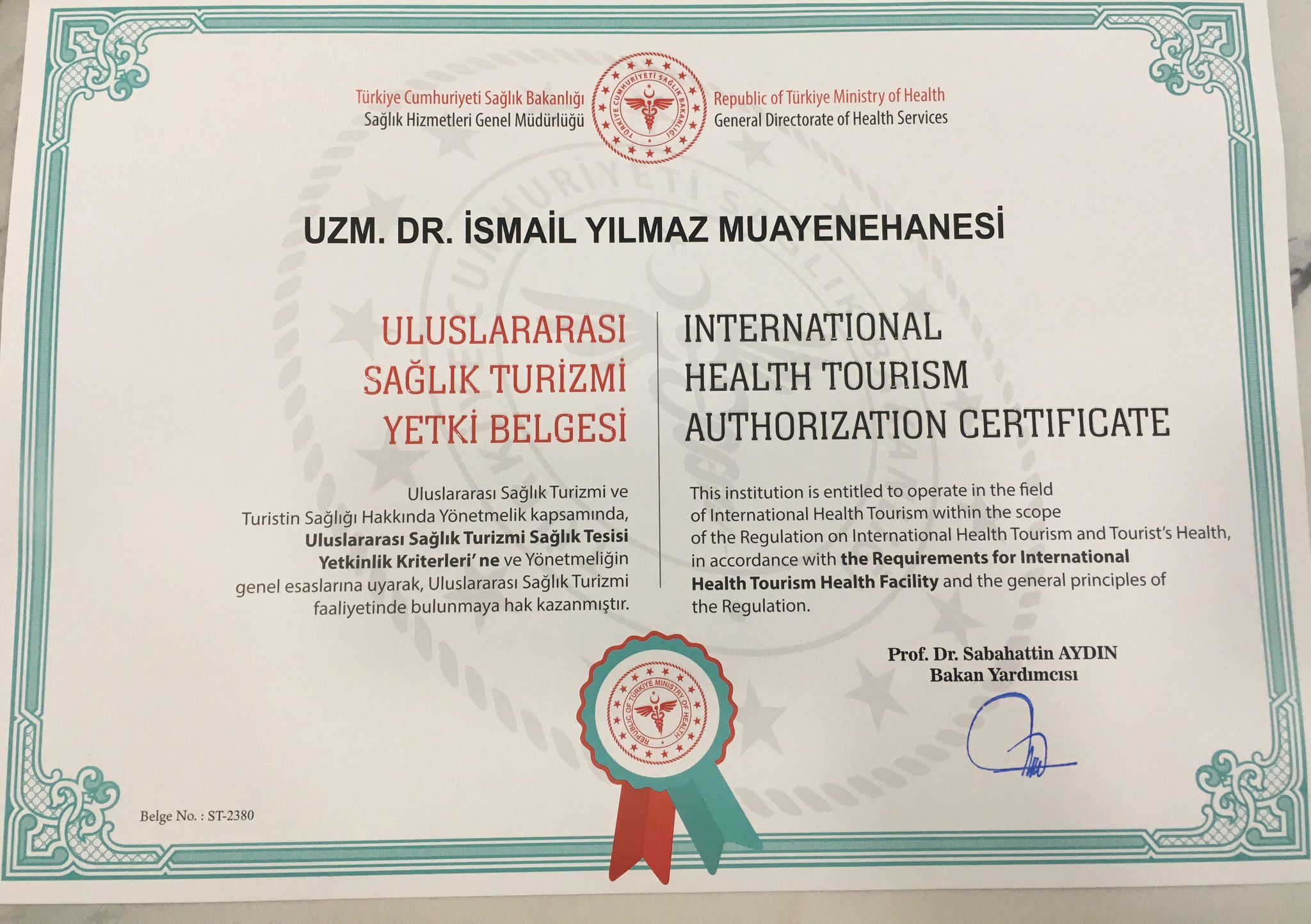
İSOM Orthopedics is on Karanfil Sokak in Levent, Beşiktaş, on the European side of Istanbul. The clinic was founded in 2000 by Dr. İsmail Yılmaz as one of the first private orthopedics and traumatology centers in the city, and has about 25 years of clinical experience. The following is general guidance for patients who are considering treatment of an injury or its after-effects in Istanbul, Turkey.
- Acute injuries: a fresh fracture or dislocation is an emergency and should be treated promptly near where it happened. Travel is usually appropriate for planned problems, for example a malunion, a nonunion, a stiff joint after an old injury, or a second opinion.
- Before you travel: send your reports, X-ray or CT images (the image files, not only the written report), operative notes and a list of your medicines and allergies, so the surgeon can give an informed view before the consultation. The doctor may ask for new imaging on arrival.
- How long to plan: a consultation and imaging can take a day or two. If surgery is advised, plan for the hospital stay and for the first check-ups; your surgeon will tell you when it is safe to fly, which depends on the operation. Flying soon after surgery raises the risk of blood clots in some patients, so ask about this.
- Rehabilitation: early physiotherapy often starts in Istanbul, and the longer part is usually done near home.
- After you return: arrange follow-up with a local orthopedic doctor or physiotherapist, and carry a copy of the operative report, implant information and your imaging.
To ask about your situation, contact the clinic on +90 (212) 324 0 324 or on WhatsApp at +90 (533) 479 63 38. Cost depends on the injury and the treatment, so it can only be discussed after the doctors have seen your records.
Related articles
These articles on the İSOM blog go deeper into specific topics, grouped by theme.
Understanding traumatology
- What is traumatology?: the definition and scope of the specialty.
- What conditions does traumatology treat?: a list of injuries and problems it covers.
- What does a traumatologist do?: the doctor's role from assessment to follow-up.
- Orthopedics and traumatology in Istanbul: what to expect from care in the city.
- Emergency orthopedics in Levent: how fractures and dislocations are handled urgently.
Fractures
- Arm fractures: causes, symptoms and treatment options.
- I broke my shoulder, what should I do?: first steps and treatment of shoulder fractures.
Dislocations and sprains
- What is a dislocation?: how dislocations are reduced and treated.
- Shoulder dislocation: symptoms, causes and treatment methods.
- Shoulder dislocation surgery: when surgery is considered and what it involves.
- Hip prosthesis dislocation: what happens when a hip replacement comes out of position.
- Ankle sprain swelling: how long swelling normally lasts and when to be concerned.
Related treatments
Injury care often continues with other services at İSOM.
- Arthroscopic surgery and sports injuries: keyhole surgery for meniscus, ligament and cartilage problems.
- Rehabilitation: guided recovery of movement and strength after injury or surgery.
- Shoulder replacement: an option for severe shoulder fractures or damaged joints.
- Hip replacement: treatment for hip fractures and worn hip joints.
Frequently Asked Questions
Consultez Nos Spécialistes en Orthopédie
Contactez notre équipe médicale à Istanbul pour toute question concernant votre diagnostic, vos options chirurgicales et la prise de rendez-vous.