


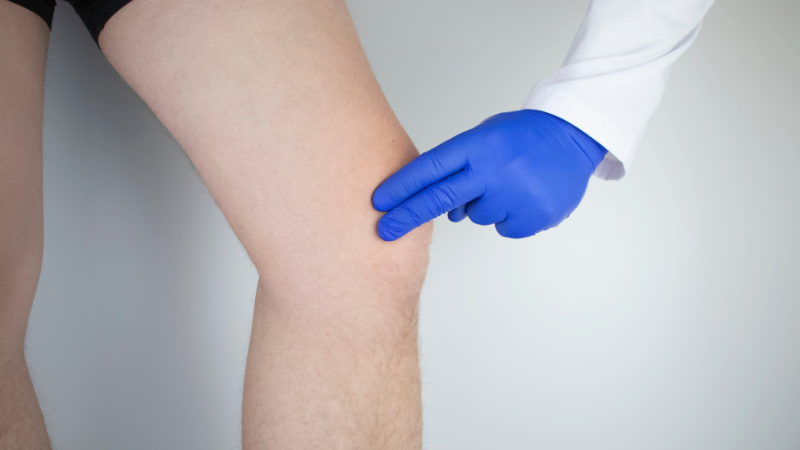
A cruciate ligament tear is one of the serious injuries seen in the knee joint and is particularly common among athletes. However, it affects not only professional athletes but anyone who makes sudden movements, falls, or sustains an impact in daily life. When this vital structure that provides stability to the knee joint is damaged, both mobility and quality of life are severely affected.
In this article, we will examine in detail what a cruciate ligament tear is, its most common symptoms, and diagnosis and treatment methods.
What Is a Cruciate Ligament?
The knee joint has a complex structure between the thigh bone (femur) and shin bone (tibia). One of the most important roles in providing stability belongs to the cruciate ligaments located in the front and back:
-
Anterior cruciate ligament (ACL – Anterior Cruciate Ligament)
-
Posterior cruciate ligament (PCL – Posterior Cruciate Ligament)
The anterior cruciate ligament plays an active role especially in movements such as sudden changes of direction, jumping, or twisting. For this reason, it is one of the most frequently injured ligaments during sports.
Causes of Cruciate Ligament Tears
Cruciate ligament tears mostly occur during sudden movements requiring high exertion.
The main causes are:
-
Excessive load on the knee during sudden changes of direction
-
Direct blow to the knee
-
Landing awkwardly after jumping
-
Uncontrolled twisting movements in the knee joint
-
Traffic accidents or falls from a height
Sports such as football, basketball, volleyball, handball, and skiing increase the risk factor.
Symptoms of a Cruciate Ligament Tear
1. A “Popping” or “Snapping” Sound at the Moment of Injury
Many patients state that they heard or felt a distinct sound in their knee at the moment of injury. This is one of the first signs of a ligament tear.
2. Severe Knee Pain
Pain starting at the moment of the tear makes walking difficult and intensifies with movement. The pain may persist even at rest.
3. Rapidly Developing Swelling
In cruciate ligament tears, bleeding into the knee joint leads to noticeable swelling within a few hours.
4. Feeling of Giving Way or Instability in the Knee
A sensation that the knee is “giving way,” especially when going up or down stairs or during sudden movements, is common.
5. Restricted Movement and Locking
After the injury, fully bending or straightening the knee becomes difficult. A catching or locking sensation may be experienced.
Diagnostic Process
Physical Examination
An orthopedic specialist evaluates the knee's range of motion and stability. The condition of the ligament is checked with maneuvers such as the Lachman test and pivot shift test.
Imaging Methods
-
MRI (Magnetic Resonance Imaging): It is the method that shows cruciate ligament tears most clearly.
-
X-Ray: Used to understand whether there is a fracture in the bone structure.
Treatment Methods
Treatment is determined according to the patient's age, activity level, and the degree of injury.
Conservative (Non-Surgical) Treatment
-
Rest and activity restriction
-
Ice application
-
Elastic bandage or knee brace
-
Physiotherapy and muscle strengthening programs
Surgical Treatment
Especially in young and active individuals, a new ligament is placed to replace the torn ligament. Surgery is usually performed using arthroscopic methods. Afterwards, knee functions are restored through the rehabilitation process.
Prevention Methods
-
Performing warm-up exercises before sports
-
Strengthening the muscles around the knee
-
Learning proper sports techniques
-
Using appropriate footwear and protective equipment
Conclusion
When neglected, a cruciate ligament tear can lead to permanent knee instability and cartilage damage. Therefore, when symptoms are noticed, an orthopedic specialist should be consulted without delay. Early diagnosis and accurate treatment accelerate the return to normal life and sports.
Healthy Steps with İSOM Orthopedics
As İSOM Orthopedics, we stand by our patients in cruciate ligament tears and other knee injuries with modern diagnostic and treatment methods. Our experienced orthopedic specialists aim to help you regain your health as soon as possible with personalized treatment plans.
For more information, you can visit our Home page, read our About Us article, contact us through the Contact section, or follow our Instagram account to view our current health content.