


What Happens When Cruciate Ligaments Tear?
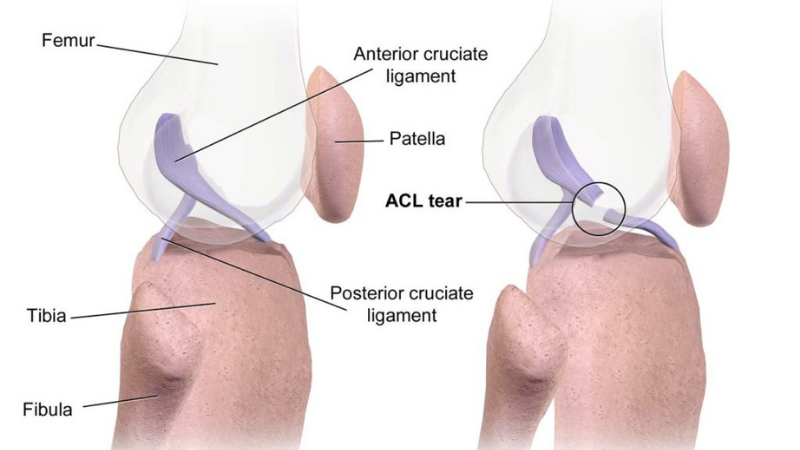
The knee joint is one of the structures with the highest load-bearing capacity and one of the most complex in the human body. For this intricate structure to maintain its healthy function, ligamentous tissues must work soundly and harmoniously. Cruciate ligaments are among the most critical structures that provide knee stability. In particular, the anterior cruciate ligament (ACL) and posterior cruciate ligament (PCL) help the knee remain stable during forward-backward and rotational movements. However, in the event of a complete or partial tear of these ligaments, serious loss of function can occur. A cruciate ligament tear is a serious orthopedic problem encountered not only in athletes, but also in daily life.
What Symptoms Occur When a Cruciate Ligament Tears?
The first symptom of a cruciate ligament tear is usually sudden and sharp pain in the knee. Some people state that they hear a "popping sound" in their knee at the moment of the tear. Following this event, swelling develops rapidly and the individual has difficulty moving the knee fully. Particularly when the anterior cruciate ligament is torn, a person may feel their knee "giving way" while walking. This condition brings a feeling of losing control over the knee. At times, it may feel as though the knee is slipping out of place. Recurrent giving way or locking of the knee are among the symptoms that directly affect the quality of daily life.
What Are the Causes of Cruciate Ligament Tears?
Cruciate ligament tears generally occur as a result of sudden changes of direction, rapid stops, unbalanced landings after jumping, twisting of the knee, or direct trauma. The reason they are commonly seen in athletes is that movements performed at high speed increase the load placed on the knee. However, this is not limited to professional athletes. In daily life, cruciate ligaments can also tear as a result of a simple fall, misstepping while descending stairs, or slipping.
How Is a Cruciate Ligament Tear Diagnosed?
The diagnostic process begins with a detailed physical examination. The orthopedic specialist listens to the patient's history, evaluates complaints, and performs various clinical tests. In particular, ligament integrity is assessed through maneuvers such as the Lachman test, anterior drawer test, and pivot-shift test. These tests can identify a tear with a high accuracy rate. For a definitive diagnosis, Magnetic Resonance Imaging (MRI) is used. MRI provides detailed information not only on the condition of the cruciate ligaments, but also on the menisci, cartilage structure, and other ligamentous tissues. If bone damage or a fracture is suspected, X-ray imaging can also be performed.
What Happens After a Cruciate Ligament Tear?
If the ligaments tear, knee stability is severely compromised. This alters the person's walking gait, prevents exercise, and makes even simple daily activities difficult. In the long term, untreated or improperly treated cruciate ligament tears increase the risk of developing osteoarthritis in the knee joint. Additionally, meniscus and cartilage injuries may also occur. These complications can progress to a level requiring knee replacement surgery in later years. Recurrent instability episodes increase the risk of falls, significantly diminishing quality of life.
How Is the Treatment Process Planned?
Non-Surgical Treatment Methods
In partial tears or individuals with low physical activity levels, non-surgical treatment may be preferred. This treatment protocol generally includes:
-
Rest, ice application, compression, and elevation (RICE protocol)
-
Use of a knee brace
-
Pain relievers and anti-inflammatory medications
-
Muscle strengthening exercises
-
Proprioceptive training
Throughout this process, the patient must be monitored regularly and the exercise program should be progressed under the supervision of a physical therapist.
Surgical Intervention
In complete tears, surgical intervention is recommended, especially for young and active individuals. With arthroscopic surgery, the torn ligament is removed and a new ligament graft is placed. This graft is usually taken from the patient's own hamstring tendon. The postoperative physical therapy process can take at least 6–12 months. The success of the surgery depends on regular and disciplined compliance with the rehabilitation program.
Rehabilitation Stages and Return to Sports
First 6 Weeks: Basic Stabilization
During this period, pain and edema are brought under control. Full straightening of the knee is achieved. The quadriceps muscle is activated through passive exercises.
After Week 6: Strength and Flexibility
Muscle strength is increased, and balance training begins. Resistance exercises with a Theraband, stationary cycling, and step-up exercises are included in this period.
Between 3–6 Months: Functional Strength Acquisition
Single-leg balance exercises, balance board drills, agility training, and plyometric exercises begin. Performance-oriented movements such as changes of direction and short sprints are planned specifically for athletes.
6–9 Months: Return to Sports
The decision to return to sports is made not solely based on time, but according to various functional tests. Return to sports is approved once single-leg hop, muscle strength symmetry, balance, and agility tests are completed.
Long-Term Consequences of Cruciate Ligament Tears
When a ligament tear is untreated or managed with inadequate rehabilitation, recurrent knee instability, joint osteoarthritis, meniscus tears, and muscle imbalances develop. This can lead to permanent knee damage and a significant drop in quality of life in later years. For athletes in particular, leaving sports and permanent loss of performance may also occur.
Why İSOM Physical Therapy Center?
İSOM Physical Therapy Center offers an individualized treatment plan for each patient through personalized protocols and scientific approaches applied after cruciate ligament tears. A rehabilitation process suitable for each person's age, profession, sports habits, and knee anatomy is designed. Continuous evaluations and exercises conducted with physical therapists ensure safe patient recovery.
Start Anew with a Strong Step
If problems you experience with your cruciate ligaments negatively affect your quality of life, as İSOM Physical Therapy Center, we are ready to offer you the most accurate treatment approaches with fully personalized planning. We are here to protect your knee, restore its former function, and ensure you can move with confidence. To receive detailed information about the most suitable solutions and treatments for you, you can visit our homepage, and take a look at our About Us page to get to know our center's philosophy and specialist team more closely. You can also follow our blog page for treatment processes, exercise recommendations, and current health content. At the same time, you can follow our Instagram account. Return to your health with a strong step. İSOM is always by your side.