


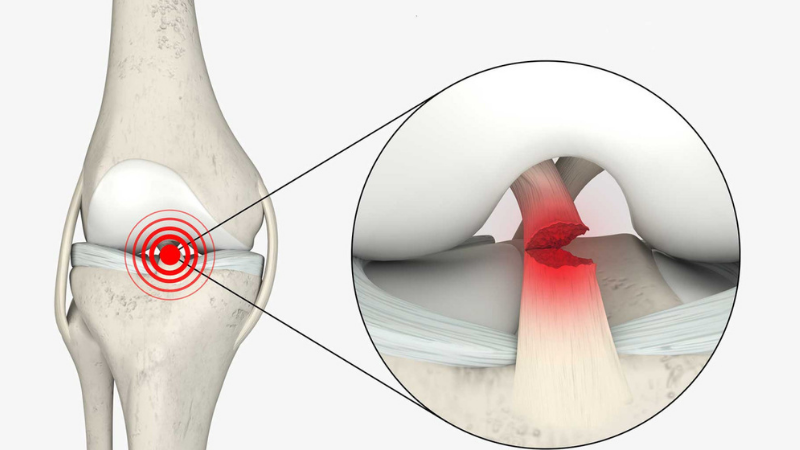
What Is a Cruciate Ligament Tear?
The knee joint is one of the most frequently used and complex structures in the human body. The anterior cruciate ligament (ACL) and posterior cruciate ligament (PCL) located here are the most critical components of knee stability. A cruciate ligament tear generally refers to the partial or complete tearing of these ligaments. It can be encountered following sudden stops, changes of direction, landing from a height, or trauma, in young athletes as well as in daily life. These injuries can cause knee pain, loss of function, and a significant decrease in quality of life.
How Does the Cruciate Ligament Tear Diagnostic Process Work?
Cruciate Ligament Tear Tests and Clinical Examination
In individuals presenting with a suspected tear, the diagnostic process begins with an orthopedic examination. Symptoms experienced by the patient, such as a “popping” or “snapping” sensation, giving way, or instability in the knee, are carefully evaluated. Initial clues regarding the degree of the tear are then obtained through clinical tests such as the Lachman Test, the Pivot Shift Test, and the Anterior Drawer Test.
Imaging Techniques for Cruciate Ligament Tears
A definitive diagnosis is usually established using Magnetic Resonance Imaging (MRI). MRI reveals the details of the cruciate ligament tear along with accompanying damage to other tissues such as the meniscus and cartilage. If necessary, X-rays may also be used to evaluate bony structures.
What Are the Treatment Methods for a Cruciate Ligament Tear?
Non-Surgical Treatment for Cruciate Ligament Tears
In cases without a complete tear, a conservative approach may be preferred without requiring surgery. At this stage:
-
RICE protocol (rest, ice application, compression, elevation)
-
Knee braces and supportive equipment
-
Pain management
-
Muscle strengthening and balance training
-
Proprioception exercises are applied.
This approach is often suitable for older individuals and those with low physical activity levels.
Cruciate Ligament Tear Repair with Surgical Intervention
In young or active individuals with a complete cruciate ligament tear, arthroscopic anterior cruciate ligament reconstruction is preferred. A new ligament is constructed using a graft taken from the hamstring tendon. After surgery, intensive rehabilitation lasting 6 to 12 months is required. Success is directly related to physiotherapy support and the patient's adherence to the program.
Cruciate Ligament Tear Rehabilitation Process
First 6 Weeks: Baseline Balance and Pain Control
The goals of this period are defined as reducing pain, minimizing joint swelling, and achieving full knee extension. Gentle activation exercises are performed for the quadriceps muscle.
Intermediate Phase (Weeks 6–12): Strength and Balance Training
At this stage, symmetry and flexibility are developed through activities such as controlled strength exercises, resistance with resistance bands, stationary cycling, and step-ups.
Functional Strengthening (Months 3‑6)
Balance board exercises, single-leg training, plyometric drills, and agility exercises are performed. For athletes, functional movements such as sprinting, directional changes, and lateral drills are supported.
Return-to-Sport Criteria (Months 6–9)
The return-to-sport process is not based on duration alone, but also on meeting established test criteria:
-
Single-leg hop symmetry,
-
Balance duration,
-
Muscle strength percentage symmetry.
Individuals who meet these criteria can usually return to sports within 6–9 months.
What Long-Term Problems Can a Cruciate Ligament Tear Cause?
Cruciate ligament tears that are left untreated or inadequately rehabilitated can lead to early knee wear, primarily osteoarthritis. Due to persistent instability, issues such as falls, re-rupture, or difficulty walking may develop. Therefore, prompt intervention and an accurate treatment plan are of paramount importance.
Why Should You Choose İSOM Physical Therapy Center for Cruciate Ligament Tear Treatment?
Evidence-Based Treatment Protocols for Cruciate Ligament Tears
İSOM Physical Therapy Center creates personalized plans based on the latest scientific protocols in accordance with clinical guidelines for cruciate ligament tear treatment. It monitors recovery through regular measurements and assessments.
Personalized Approach to Cruciate Ligament Tear Rehabilitation
Personalized plans for muscle strengthening, balance, proprioception, and range of motion are prepared according to age, athletic level, and individual needs. Safe and controlled progress is ensured throughout the process with expert physiotherapists.
We Welcome You to İSOM Physical Therapy Center
If you are also experiencing instability, pain, or loss of function in your knee due to a cruciate ligament tear, as İSOM Physical Therapy Center we offer you professional, evidence-based, and personalized guidance from the diagnostic stage through to returning to sports.
For more detailed information and an appointment, you can visit our Homepage, and explore our About Us page to learn about our expert staff and services. You can follow us on Instagram for exercise videos, case examples, and regular updates regarding the treatment process.
Take a strong step towards your health. İSOM is by your side.