


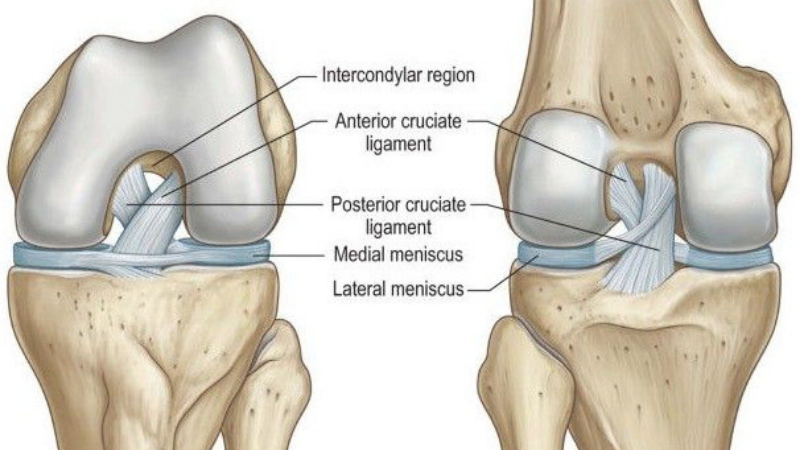
What Is a Cruciate Ligament Tear?
The knee joint is one of the most complex and heavily loaded structures in the human body. One of the primary structures providing stability in this joint is the cruciate ligaments. A cruciate ligament tear is a condition involving the partial or complete rupture, particularly of the anterior cruciate ligament (ACL) and less frequently of the posterior cruciate ligament (PCL). It usually occurs as a result of sudden stops, changes in direction, hard landings after jumping, twisting the knee, or trauma. Although common among athletes, it can also occur in daily life due to a fall or an awkward step. These tears can cause not only pain, but also a feeling of instability in the knee, loss of function, and a decreased quality of life.
How Does the Diagnostic Process for a Cruciate Ligament Tear Proceed?
Clinical Examination and Tests for Cruciate Ligament Tears
The diagnostic process for individuals suspected of having a cruciate ligament tear begins with a detailed orthopedic examination. The orthopedic specialist listens to the patient’s complaints and inquires about symptoms such as “giving way”, “locking”, or a “popping sound” in the knee. Then, ligament integrity is assessed through clinical evaluations such as the Lachman Test, Anterior Drawer Test, and Pivot Shift Test. These tests are used particularly for the fast and effective diagnosis of anterior cruciate ligament tears.
Imaging Methods Used for Cruciate Ligament Tears
For a definitive diagnosis, Magnetic Resonance Imaging (MRI) is generally preferred. In addition to the condition of the cruciate ligament, MRI provides detailed information about the meniscus, cartilage, or other soft tissues. Furthermore, X-rays may be required to examine bone structures, especially if an accompanying fracture is suspected.
What Are the Treatment Methods for a Cruciate Ligament Tear?
Non-Surgical Treatment for Cruciate Ligament Tears
In mild and partial cruciate ligament tear cases, surgery may not be necessary. In these situations:
-
RICE protocol (rest, ice, compression, elevation)
-
Use of a knee brace
-
Pain management
-
Muscle strengthening
-
Proprioception exercises are applied.
This approach may be sufficient, particularly in older individuals or people with low physical activity levels.
Cruciate Ligament Tear Repair with Surgical Intervention
In complete tears and active individuals, arthroscopic anterior cruciate ligament reconstruction is recommended. In this procedure, the torn ligament is removed and a new ligament is created, usually using a graft taken from the hamstring tendon. A rehabilitation program lasting at least 6-12 months is implemented after surgery. The most important complement to successful surgery is regular and professional physical therapy.
Rehabilitation Process for Cruciate Ligament Tears
First 6 Weeks After Cruciate Ligament Tear – Fundamental Control
During this period, the primary goal is to reduce pain, control swelling, and restore full extension (complete straightening of the knee). The quadriceps muscle is activated with low-intensity exercises.
Intermediate Exercise Stages After Cruciate Ligament Tear
-
From the 6th week onward, controlled strengthening and balance exercises begin. Activities such as resistance bands (TheraBand), stationary cycling, and step-ups are planned to increase flexibility and ensure muscle symmetry.
Functional Strengthening After Cruciate Ligament Tear
-
After the 3rd month, functional strength is focused on with balance boards, single-leg exercises, plyometric drills, and agility training. For athletes, sprinting, lateral drills, and change-of-direction exercises come into play.
Return to Sports Criteria After Cruciate Ligament Tear
The return to sports process is guided not only by time, but by specific tests. These tests include:
-
Single-leg hop distance
-
Balance test
-
Muscle strength symmetry
and are evaluated based on such criteria. Athletes generally return to the field at the end of 6–9 months.
What Risks Does a Cruciate Ligament Tear Carry in the Long Term?
Untreated or improperly rehabilitated cruciate ligament tears increase the risk of knee calcification (osteoarthritis) in subsequent years. In addition, persistent instability can lead to problems such as falls, difficulty walking, and re-tearing. For this reason, early intervention, professional guidance, and a patient rehabilitation process are extremely important.
Why Choose İSOM Physical Therapy for Cruciate Ligament Tear Treatment?
Cruciate Ligament Tear Protocols Implemented with Scientific Guidelines
İSOM Physical Therapy applies individualized staged protocols following cruciate ligament tears in accordance with modern scientific approaches. A personalized plan is created for each patient, and the recovery process is monitored with regular evaluation tests.
Cruciate Ligament Tear Rehabilitation with a Personalized Approach
Customized programs are prepared for each patient, from athletes to elderly individuals, based on muscle strength, balance, range of motion, and return-to-sports criteria. Safe progress is ensured throughout the process accompanied by specialist physiotherapists.
We Welcome You to the İSOM Physical Therapy Center
If you are also experiencing a cruciate ligament tear, or feeling instability, pain, or limited mobility in your knee; as the İSOM Physical Therapy Center, we offer you scientific, reliable, and personalized solutions.
For detailed information and appointments, you can visit our Home Page, and take a look at our About Us page to learn about our center's mission, vision, and expert staff. You can also follow us on Instagram for exercise videos and latest updates regarding treatment processes.
Return to your health with a strong step. İSOM is by your side.