


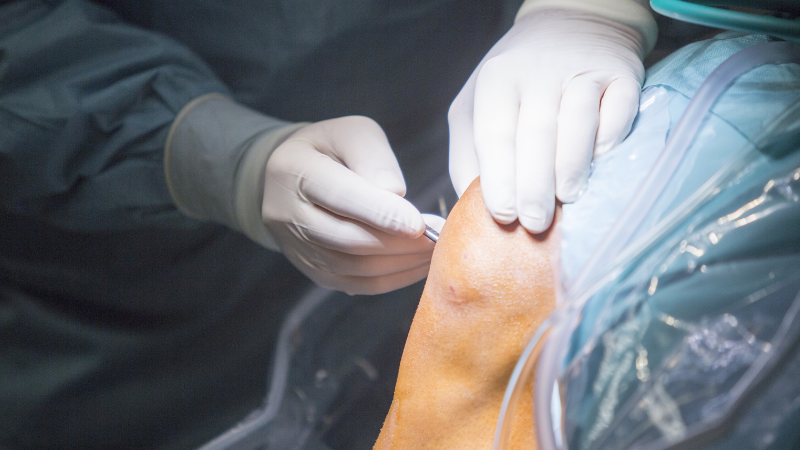
Used in the diagnosis and treatment of conditions affecting the body's joints, arthroscopy is one of the most frequently preferred minimally invasive surgical methods. Performed through small incisions, this procedure allows for detailed visualization inside the joint and surgical treatment when necessary. Arthroscopy surgery has become a commonly used method, particularly for sports injuries and joint disorders.
Being less invasive compared to traditional open surgery, offering faster recovery times, and enabling patients to return to their daily routines more quickly are among the primary advantages of arthroscopy.
How Is Arthroscopy Surgery Performed? Process and Stages
The arthroscopy procedure is performed under general or local anesthesia. The surgeon makes several small incisions around the joint and inserts a thin, fiber-optic instrument called an arthroscope through one of these incisions. This device is equipped with a camera that provides clear visualization of internal joint structures. The captured images are projected onto a monitor, allowing the surgeon to examine the damage inside the joint and intervene if needed.
Procedures performed during arthroscopy surgery:
- Repairing damaged tissues within the joint
- Treating meniscus, ligament, or cartilage issues
- Removing foreign bodies from the joint
- Clearing inflammation or fluid accumulation within the joint
The duration of surgery typically ranges from 30 minutes to 1 hour, and patients are usually discharged on the same day following the procedure.
What Are the Advantages of Arthroscopy? Why Choose It?
Because arthroscopy is a minimally invasive surgical technique, it offers numerous advantages to patients. Compared to traditional surgical methods, the recovery process is shorter and more comfortable. In addition, the risk of complications following arthroscopy is lower.
Key advantages of arthroscopy:
- Smaller incisions: Minimal post-operative scarring provides a significant cosmetic advantage.
- Faster recovery: Patients can return to their daily activities shortly after the procedure.
- Reduced risk of infection: Small incisions and minimal tissue trauma greatly decrease infection risk.
- Less pain: Post-procedure pain is lower compared to conventional open surgery.
- Shorter hospital stay: Most patients are discharged on the same day.
In Which Conditions Is Arthroscopy Used? Common Indications
Arthroscopy is used in the diagnosis and treatment of conditions occurring particularly in joints such as the knee, shoulder, elbow, hip, ankle, and wrist. The most common indications include sports injuries, cartilage tears, and intra-articular inflammation.
Conditions that can be treated with arthroscopy include:
- Meniscus tears
- Anterior cruciate ligament (ACL) tears
- Shoulder dislocations and muscle tears
- Cartilage damage
- Joint fluid accumulation (synovitis)
- Joint inflammation (arthritis)
In managing such conditions, arthroscopy provides patients with a fast and effective solution.
Types of Arthroscopy: Which Joints Can It Be Performed On?
Arthroscopy is a surgical method that can be applied to many different joints in the body. Arthroscopy performed on each joint may vary in terms of the techniques and treatment approaches utilized.
Main joints where arthroscopy is performed:
- Knee Arthroscopy: Used for meniscus tears, cartilage problems, and cruciate ligament injuries in the knee joint.
- Shoulder Arthroscopy: Muscle tears, tendon inflammation, and shoulder dislocations can be treated in the shoulder.
- Hip Arthroscopy: Used to treat issues such as labral tears and joint impingement in the hip joint.
- Elbow Arthroscopy: A method used to treat muscle and tendon problems in the elbow joint.
- Ankle and Wrist Arthroscopy: Provides effective solutions for ankle sprains, cartilage damage, and wrist joint problems.
Tailored arthroscopic techniques for each joint help patients regain healthy joint function.
Recovery Process After Arthroscopy: What Should Patients Expect?
The recovery process following arthroscopic surgery varies depending on the patient's overall health status, the specific joint operated on, and the interventions performed during the procedure. However, in general, recovery after arthroscopy is much faster and more comfortable than after open surgeries.
Key points to consider during recovery:
- Resting the joint and applying ice is recommended during the first few days.
- Following the physical therapy program recommended by the doctor accelerates the healing process.
- Appropriate medications can be used to alleviate pain and swelling.
- Adhering to the exercise program prescribed by the surgeon helps the joint regain strength.
Patients can typically resume daily activities within a few weeks. However, athletes and physically active individuals must obtain medical clearance before returning to full performance.
Risks of Arthroscopy: What to Watch Out For
As with any surgical procedure, arthroscopy carries certain risks. However, because it is a minimally invasive procedure, these risks are generally low.
Possible risks and complications:
- Infection: Although low, a minor risk of infection exists.
- Bleeding: Mild bleeding may occur at the incision sites.
- Blood clots: Rarely, blood clots can form around the joint.
- Joint stiffness: Some patients may experience temporary stiffness in the joint following the procedure.
These risks can be minimized with appropriate treatment and medical follow-up.
Frequently Asked Questions
What is arthroscopy?
Arthroscopy is a minimally invasive surgical procedure performed to visualize and treat conditions inside a joint.
How long does arthroscopy surgery take?
It typically takes between 30 minutes and 1 hour.
How long does it take to recover after arthroscopy?
Most patients can return to daily activities within a few weeks.
When can I return to sports after arthroscopy?
Athletes can generally return to full performance within a few months, provided they have doctor approval.
On which joints is arthroscopy performed?
It can be performed on the knee, shoulder, hip, elbow, wrist, and ankle joints.
What are the risks of arthroscopy?
Low risks include infection, bleeding, blood clot formation, and joint stiffness.
Conclusion: Regain Your Joint Health with Arthroscopy
As a minimally invasive surgical method, arthroscopy has revolutionized the diagnosis and treatment of joint conditions. Thanks to faster recovery times, less pain, and lower complication risks, it offers an ideal solution for patients. If you are experiencing joint problems, you can restore your health in a short time with arthroscopy.