


Prolotherapy is a series of injections, usually of a dextrose (sugar) solution, placed where ligaments and tendons attach to bone. It is used for chronic joint, ligament and tendon pain. The strongest evidence is for knee osteoarthritis; for other uses it is weaker or mixed. It is an option to consider, not a proven cure.
Key Points
- Who it helps: people with long-standing knee, tendon, sacroiliac or ligament-related pain that has not settled with exercise and simple measures
- Before treatment: a clinical examination, usually with imaging review, to confirm that the pain comes from a structure prolotherapy can reasonably address
- Recovery: no surgery; soreness and stiffness for a few days, and improvement, when it occurs, builds over weeks across a series of sessions
- In Istanbul: İSOM in Levent can review your reports and imaging before you travel and plan sessions together with physiotherapy
What is prolotherapy?
Prolotherapy, also called proliferation therapy or prolo, is an injection treatment for chronic musculoskeletal pain. A solution that irritates the tissue mildly, most commonly dextrose, is injected at the points where ligaments and tendons attach to bone, or into a joint. The aim is to provoke a small, controlled repair response in tissue that heals poorly on its own. The word comes from 'proliferation': the idea is to encourage the growth of new connective tissue.
The technique has been used since the mid-twentieth century, and is associated with the American physician George Hackett, who described it for lax ligaments. Today it is offered mainly by physicians working in pain medicine, sports medicine and musculoskeletal medicine. It remains a minority treatment: major guidelines for conditions such as osteoarthritis do not routinely recommend it, mainly because the research base is smaller than for exercise or surgery.
It is different from a corticosteroid injection, which suppresses inflammation for a time, and from PRP, which uses a concentrate from your own blood. Prolotherapy is also not the same as mesotherapy, which places small amounts of medication in the skin to relieve pain. At İSOM, prolotherapy belongs to the Alternative Medicine department, next to ozone therapy and mesotherapy, and works alongside Orthopedics and Physiotherapy.
How does prolotherapy work?
The proposed explanation is that a concentrated dextrose solution causes a brief local irritation that triggers a healing response, including inflammatory cells and growth factors, which then stimulate fibroblasts to lay down collagen. In theory, this strengthens ligament and tendon attachments that have become lax or degenerated. This mechanism is supported by laboratory and animal work, but it has not been clearly demonstrated in human patients, and the evidence on whether tissue is truly rebuilt is limited.
Other effects may also contribute. Dextrose injected into a joint or near a nerve ending may change how pain is signaled. The injection is usually combined with a local anesthetic, which gives short-term relief on the day. And a series of injections is generally combined with exercise advice, which is itself effective for many tendon and joint problems. When someone improves after prolotherapy, it is not always possible to say which of these factors was responsible.
- What is injected: usually a dextrose solution at a concentration chosen by the doctor, mixed with a local anesthetic. Other solutions are sometimes used, and the doctor will explain what is planned.
- Where it is injected: at ligament and tendon attachments to bone (entheses), into the joint space, or in the soft tissue around a joint.
- Guidance: for deep or small structures, ultrasound guidance is commonly used in this field to place the needle accurately. Your doctor will explain whether it is appropriate in your case.
Which conditions is prolotherapy used for?
Prolotherapy is mostly used for chronic pain, meaning pain that has lasted for months, in patients who have already tried the basics such as exercise, activity changes and simple pain relief. Common applications are summarized below.
| Condition | Why prolotherapy is considered | State of the evidence |
|---|---|---|
| Knee osteoarthritis | Pain and function in the joint when exercise and weight management are not enough | The strongest evidence: several randomized trials and reviews suggest reduced pain and better function, though many trials are small and quality varies |
| Tendinopathy (tennis elbow, Achilles, gluteal, patellar tendon) | Chronic tendon pain with poor healing | Some positive trials, but limited and mixed; exercise therapy remains the foundation |
| Sacroiliac joint and pelvic ligament pain | Ligament-related low back and buttock pain | Small studies with encouraging results; evidence is limited |
| Low back pain | Chronic pain thought to arise from ligaments | Mixed; some trials are positive, others show no clear difference from placebo injections |
| Ankle ligament laxity and recurrent sprains | Looseness after repeated sprains | Small studies and clinical experience; rehabilitation is the main treatment |
| Finger and thumb joint osteoarthritis, hand and shoulder problems | Joint pain and weak ligaments | Limited, mostly small studies |
A fair summary is that prolotherapy has a reasonable if modest research base for knee osteoarthritis, and a thinner, more variable base for the other uses.
What does the evidence say about prolotherapy?
For knee osteoarthritis, randomized trials comparing dextrose injections with saline or with exercise have generally reported greater improvement in pain and function after several months with prolotherapy. Reviews describe this as promising but note that many studies are small, use different solutions and schedules, and follow patients for a limited time. We do not know with certainty how long the effect lasts or whether it changes the course of the arthritis.
For other conditions, results are less consistent. Some trials in low back pain and tendinopathy found no clear advantage over injections of plain saline, which is a reminder that needling and injection themselves can have effects. A good clinic will tell you honestly that the research is incomplete.
Prolotherapy does not regrow lost cartilage, does not reverse advanced osteoarthritis, and does not repair a complete tendon or ligament tear. If you have bone-on-bone arthritis with severe deformity, a joint replacement operation may be the more appropriate discussion. If you have an unstable knee after a cruciate ligament injury, the options include rehabilitation and, in some cases, surgery.
Who is a suitable candidate, and who should avoid it?
You are more likely to be a reasonable candidate if your pain is chronic, localized, and linked to a joint, tendon or ligament; if imaging does not show a problem that needs surgery; and if you are willing to combine injections with an exercise program. Younger and older adults can both be treated, though each case is individual.
Prolotherapy is generally avoided or postponed in these situations:
- Infection: active infection in the joint or skin at the injection site, or a fever.
- Pregnancy: most clinicians avoid elective injections in pregnancy.
- Allergy: to the local anesthetic or other components of the solution.
- Anticoagulant treatment or bleeding disorders: the risk of bruising and bleeding rises and must be discussed first.
- Diabetes: the amount of dextrose used is small and not usually a problem for blood sugar, but tell your doctor so that it can be considered.
- Structural problems: a complete tendon rupture, an unstable fracture or a locked joint need other treatment.
How is prolotherapy performed, and how many sessions are needed?
The skin is cleaned and, if needed, numbed. The doctor then injects the solution at several points around the painful structure, or into the joint. Each session takes from a few minutes to a little longer for larger areas, and you leave on foot. Because deep injections around ligaments can be uncomfortable, a local anesthetic is normally included in the mixture.
Most published protocols use a series of injections spaced several weeks apart. Common patterns are three to six sessions, but the number depends on the condition and on how you respond. Improvement, when it comes, is typically gradual and builds across the series, not overnight. A reasonable practice is to review after the first few sessions and to stop if nothing has changed.
Many practitioners ask patients to avoid anti-inflammatory tablets such as ibuprofen for a period before and after the injection, on the theory that they may blunt the intended healing response. This advice is based on reasoning more than on strong trial data. If you take such medicines regularly, or paracetamol, or blood thinners, discuss this at the consultation before changing anything yourself.
What is recovery like after prolotherapy?
There is no surgical recovery. Expect soreness, a feeling of fullness or stiffness in the treated area for a few days, and sometimes a small bruise. Most people return to normal daily activities quickly, and avoid heavy or high-impact exercise for a short period as advised.
| Time after injection | What to expect |
|---|---|
| Same day | Numbness from the anesthetic, then a dull ache; walk and carry out light activity |
| Days 1 to 3 | Soreness, stiffness or fullness in the joint is common; use rest, gentle movement and the pain relief your doctor advises |
| Week 1 | Discomfort settles; start or continue the exercise program as advised; avoid high-impact sport |
| Weeks 2 to 6 | Gradual change in pain and function may become noticeable; the next session is planned at the advised interval |
| After the series | Review: pain, function, and whether maintenance or another approach is appropriate |
The injections do the work only in combination with movement. Strengthening and stretching tailored to your joint, usually guided by a physiotherapist, are what turn a short-term improvement into a lasting one.
What are the risks and side effects of prolotherapy?
Serious complications are uncommon when prolotherapy is performed by a trained doctor with sterile technique, but every injection carries some risk.
- Common: pain, stiffness or swelling for a few days; small bruises; mild fatigue.
- Infection: rare, but a joint infection is serious and needs urgent treatment. Fever, increasing redness, heat or severe pain after an injection needs a prompt examination.
- Allergic reaction: to the anesthetic or other agents, uncommon.
- Nerve or vessel irritation: rare, and the reason precise needle placement matters.
- Fainting: a short faint during injection can occur in people sensitive to needles.
- No benefit: some people notice no change, which is part of honest expectation-setting.
Prolotherapy compared with PRP, hyaluronic acid, ozone and surgery
If you are searching for injection treatments for the knee or another joint, you will meet several options. They have different purposes, and the evidence for each differs.
| Option | How it works in principle | Points to know |
|---|---|---|
| Prolotherapy | Dextrose solution at ligament and tendon attachments or in the joint | Used for chronic pain; strongest evidence in knee osteoarthritis; a series of sessions |
| PRP | Platelet concentrate from your own blood | Needs a blood draw; studied for knee osteoarthritis and some tendon problems; see the related articles |
| Hyaluronic acid | A lubricating gel injected into the joint | Short- to medium-term symptom relief in some patients with knee arthritis |
| Ozone therapy | Oxygen-ozone mixture injected near a joint or muscle | Complementary option; evidence is limited |
| Corticosteroid injection | Strong anti-inflammatory medicine | Fast but temporary relief; repeated use can weaken tendons and cartilage |
| Joint replacement | Surgical replacement of the worn joint | For advanced arthritis with major pain and loss of function after other treatments |
Patients sometimes ask whether an injection can replace a knee replacement. For mild to moderate arthritis, injections and exercise may delay or sometimes avoid surgery, but they do not repair a joint that is worn out. For advanced arthritis, surgery is the more reliable option, and the decision should be made after a proper examination and X-rays.
Treatment in Istanbul for international patients
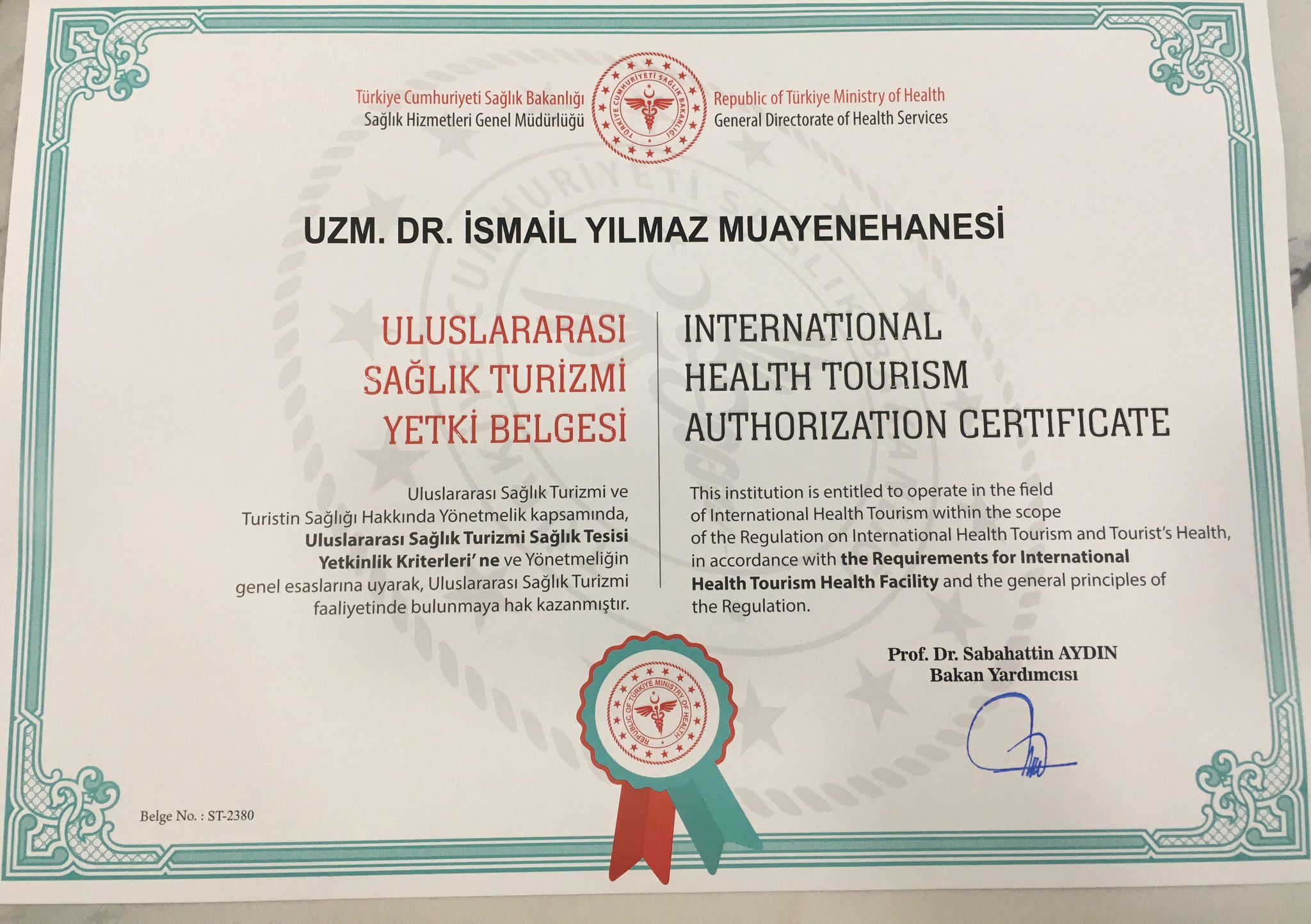
İSOM Orthopedics is at Karanfil Sokak No:8 in Levent, Beşiktaş, on the European side of Istanbul. It was founded in 2000 by Dr. İsmail Yılmaz as one of the first private orthopedics and traumatology centers in the city, and has about 25 years of clinical experience, with more than 100,000 people treated. Prolotherapy is part of the Alternative Medicine department, and the same clinic includes Orthopedics and Physiotherapy, which allows injections to be considered together with exercise treatment or with a surgical opinion.
If you are coming from abroad, these general steps help:
- Share your records beforehand: MRI and X-ray images, reports, a list of your medicines and allergies, and notes about previous injections, so the doctor can advise before you travel.
- Plan the stay realistically: a prolotherapy series is typically spaced over weeks, so a single visit may include only the first session or two. Ask what the doctor recommends for your case, and whether later sessions could be done with a doctor at home.
- Combine with physiotherapy: exercise during your stay, and a written home program, are a large part of the result.
- Arrange follow-up: take a written note of what was injected and when, and share it with your own doctor.
To ask about an appointment, call +90 (212) 324 0 324 or use WhatsApp at +90 (533) 479 63 38.
Related articles
These articles cover neighboring injection and regenerative options.
- PRP therapy for knee osteoarthritis: how platelet-rich plasma is used for arthritic knees and what the research shows.
- PRP treatment for orthopedic pain and the knee joint: an overview of the procedure and when it is considered.
- PRP or mesotherapy for hair and skin: how the two techniques differ.
- Knee stem cell therapy: a non-surgical regenerative option for the knee.
- Stem cell therapy in Istanbul: a patient guide to regenerative treatment.
- Stem cell therapy methods and options: the main approaches compared.
- Diseases that can be treated with stem cell therapy: what is established and what is still being studied.
Related treatments
- Mesotherapy: small injections in the skin over a painful area.
- Ozone therapy: a complementary injection option for joint and back pain.
- Rehabilitation: exercise programs that support recovery from injections or surgery.
- Knee replacement: the surgical option for advanced knee arthritis.
Frequently Asked Questions
Consultez Nos Spécialistes en Orthopédie
Contactez notre équipe médicale à Istanbul pour toute question concernant votre diagnostic, vos options chirurgicales et la prise de rendez-vous.